
Ptosis: How a Drooping Eyelid Affects Your Vision
I remember a patient who came to see us at Dr Rishi Eye Institute — a young woman who walked in with her chin slightly lowered, avoiding direct eye contact. She had been living with a drooping upper eyelid — known medically as ptosis — for several years. It was not severe enough to block her vision completely. But it was noticeable enough that she had quietly started stepping back from job interviews, photographs, and social gatherings.
She had not come in thinking about surgery. She had come in because her eye felt tired all the time and her forehead ached every evening. What she did not realise was that both of these problems — the fatigue and the self-consciousness — had the same cause. And both could be properly treated with the right ptosis treatment in Karnal.
What Is Ptosis? Understanding the Basics

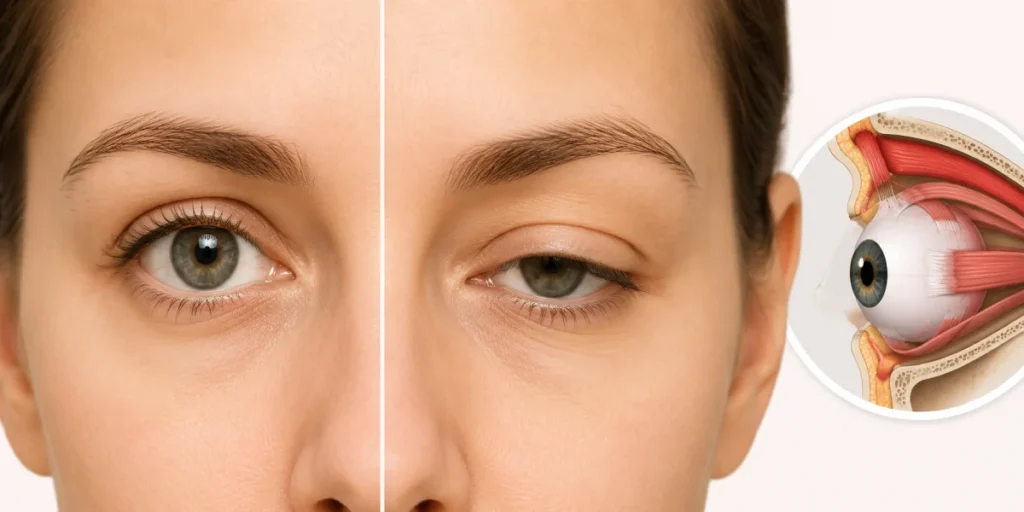
Ptosis is the medical term for the drooping of the upper eyelid. It occurs when the levator muscle — the muscle responsible for lifting your eyelid — weakens or loses its proper attachment to the eyelid tissue. The result is an eyelid that sits lower than it should, sometimes partially covering the pupil and limiting your field of vision.
Ptosis can affect one eye or both. It may be:
- Present from birth — this is called congenital ptosis
- Develop gradually with age as the levator muscle weakens
- Caused by an injury, nerve damage, or an underlying medical condition
- Appear after eye surgery or years of contact lens use, which can stretch or detach the muscle over time
Ptosis is more common than most people realise — and significantly more serious than most people understand.
It Is Not Just About How You Look
The most common misconception I come across is that ptosis is purely a cosmetic concern — something that changes your appearance but does not affect how your eyes actually work. I want to address this directly, because it is simply not true.
When your upper eyelid droops, it reduces your visual field — the total area you can see without moving your head or eyes. In significant cases, it can obstruct the upper portion of your vision entirely, making everyday tasks like driving, reading, or even walking down stairs genuinely more difficult and unsafe.
There is also a secondary problem that most patients never connect to their eyelid — chronic forehead fatigue and headaches. To compensate for the drooping lid, your forehead muscles work all day overtime, constantly trying to raise the brow and keep the lid up. By evening, this non-stop tension leads to a deeply tired, heavy feeling around your eyes that no amount of sleep seems to fix.
In children, ptosis carries an even more serious risk. If a child’s pupil is partially covered during the critical early years of visual development, the brain can reduce input from that eye — a condition called amblyopia (lazy eye). Just as early intervention makes the biggest difference in squint treatment for children, ptosis in children must also be treated without delay.
The Confidence Factor: Something Worth Talking About
I want to spend a moment on this because it matters more than people often feel comfortable admitting.
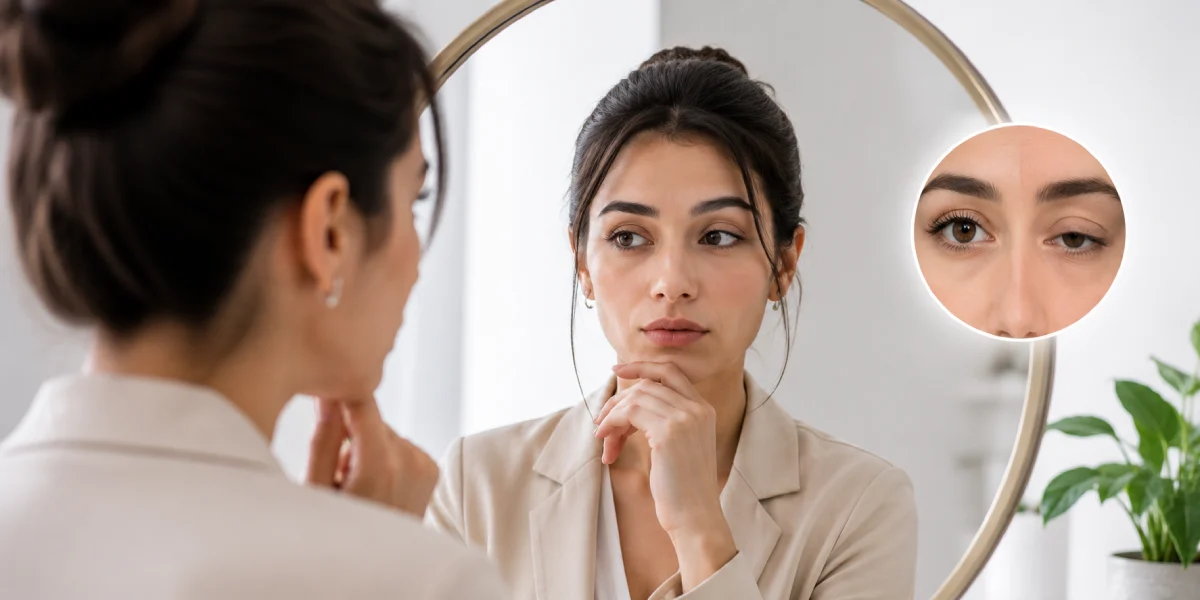
Your eyes are the first thing people notice when they meet you. They are central to how you communicate — the expressions you make, the eye contact you hold, the impression you leave behind. When one or both eyelids droop noticeably, it changes how others perceive you and, more importantly, how you perceive yourself.
Many of my patients describe pulling back from professional meetings, avoiding social situations, or feeling that people assume they are tired or uninterested — even when they feel completely alert and engaged. Some have told me they stopped appearing in family photographs. Some have turned down opportunities at work.
This is not vanity. This is a real, measurable impact on quality of life. And it is completely valid.
Research consistently shows that facial symmetry and eye openness strongly influence social perception. When ptosis creates a persistently heavy-lidded or asymmetric appearance, it can affect how confident you feel in everyday interactions — and how others naturally respond to you. You deserve to have that looked at properly.
What Does Ptosis Surgery Actually Involve?
Drooping eyelid treatment in Karnal at Dr Rishi Eye Institute always begins with a comprehensive evaluation. No two cases of ptosis are identical — the cause, severity, and remaining function of the levator muscle all influence which surgical approach is most appropriate for you.
Levator Resection (Most Common)
When the levator muscle still has some functional movement, the surgeon tightens or shortens it through a small, precise incision along the natural eyelid crease. The incision is well-hidden and heals neatly. This is the most common approach for mild to moderate ptosis in adults.
Frontalis Sling Technique (Severe Cases)
In cases where the levator muscle has very little remaining function — often seen in congenital ptosis — a sling technique is used. A small piece of the patient’s own tissue connects the eyelid to the brow muscle, allowing the brow to naturally lift the lid. This is the standard approach for children with significant congenital ptosis.
Eyelid surgery in Karnal for ptosis is typically performed under local anaesthetic for adults and general anaesthetic for children. Recovery involves some bruising and swelling during the first one to two weeks, which gradually settles as the eyelid finds its new resting position.
The results, when performed by an experienced ophthalmic surgeon, go well beyond physical appearance. Patients consistently report better vision, significantly less forehead fatigue, and a genuine shift in how they feel about themselves — more open, more present, and more confident in daily life.
Is Ptosis Surgery Safe?
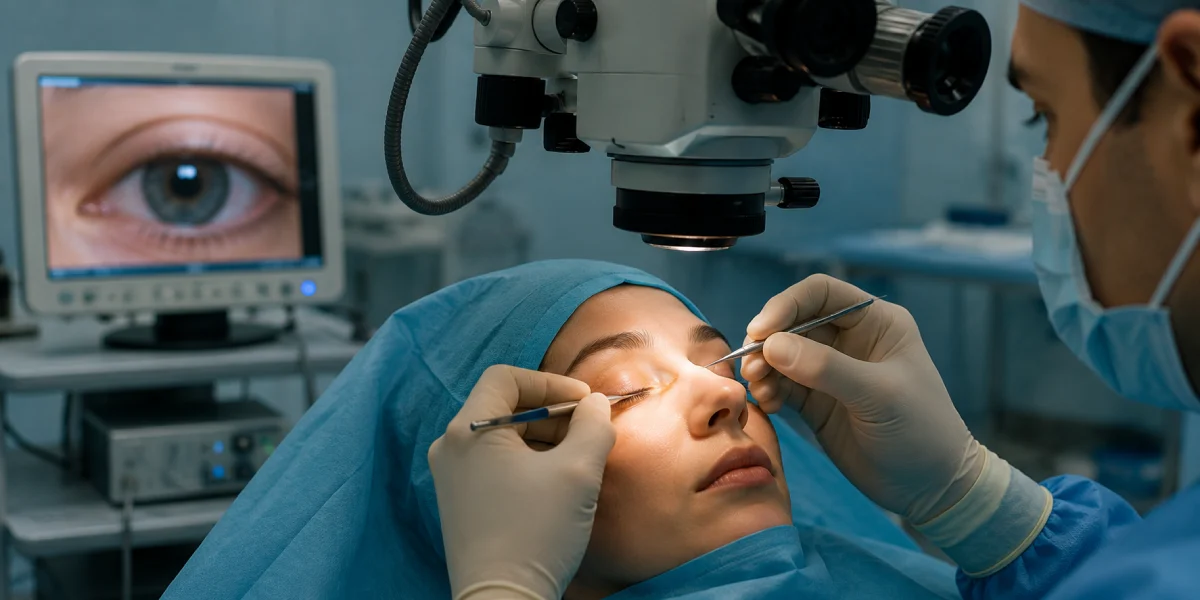
Ptosis surgery is a well-established procedure with a strong safety record when performed by a trained ophthalmic surgeon. Like any surgical procedure, it carries some risk — mild asymmetry, slight undercorrection, or overcorrection can occur in some cases and may require minor adjustment. This is why a thorough pre-surgical evaluation is so important.
At Dr Rishi Eye Institute, every ptosis patient undergoes a complete eye examination before any surgical decision is made. We assess the degree of drooping, the function of the levator muscle, the condition of the cornea, and the overall health of your eye — only then do we discuss surgical options and set realistic expectations together. You can learn more about our approach across all eye conditions on our eye care services page.
Who Should Get Evaluated for Ptosis?
You should book a comprehensive eye examination if you or your child has any of the following:
- One or both upper eyelids that appear to droop or feel consistently heavy
- A visible asymmetry between the two eyelids that has been there for some time
- Frequent forehead tension or headaches that worsen throughout the day
- A reduced field of vision, especially difficulty seeing upward
- A habit of constantly raising your eyebrows without realising it
- A persistent feeling of looking tired or unwell even when you are feeling completely fine
For children specifically, any noticeable eyelid drooping — particularly if it appears to cover any part of the pupil — should be evaluated without delay. The stakes are higher in a developing visual system, and early treatment consistently produces better long-term outcomes.
A Final Word — Your Vision and Confidence Both Matter

Ptosis is one of those conditions people tend to normalise over time — either because it has always been there, or because they assume nothing meaningful can be done, or because they feel that addressing something appearance-related is somehow less legitimate than addressing something purely medical.
None of those reasons should stop you from getting a proper evaluation. Vision matters. Confidence matters. And when one is affecting the other, that is exactly the kind of problem that deserves expert attention.
At Dr Rishi Eye Institute, we provide comprehensive assessment and advanced surgical management of ptosis — helping patients across Karnal, Kurukshetra, Panipat, and Haryana achieve better vision, improved appearance, and renewed confidence. Because sometimes, lifting an eyelid really does help lift everything else, too.
