
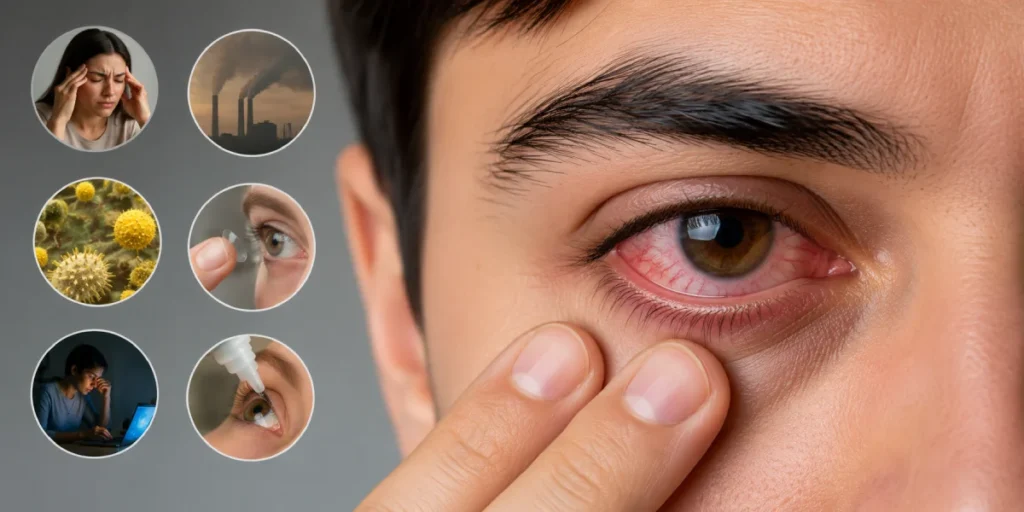
Why Are My Eyes Red? Causes and Treatment
Red eyes are one of the most common reasons people walk into an eye clinic. Most of the time, you brush it off — a late night, too much screen time, a dusty commute. And often, that is all it is.
But sometimes, red eyes are telling you something more important. Knowing the difference can protect your vision.
In this guide, I want to walk you through the real causes of red eyes, what you can do at home, and — most importantly — when you need to stop self-treating and see a professional.
What Actually Happens When Your Eyes Turn Red?
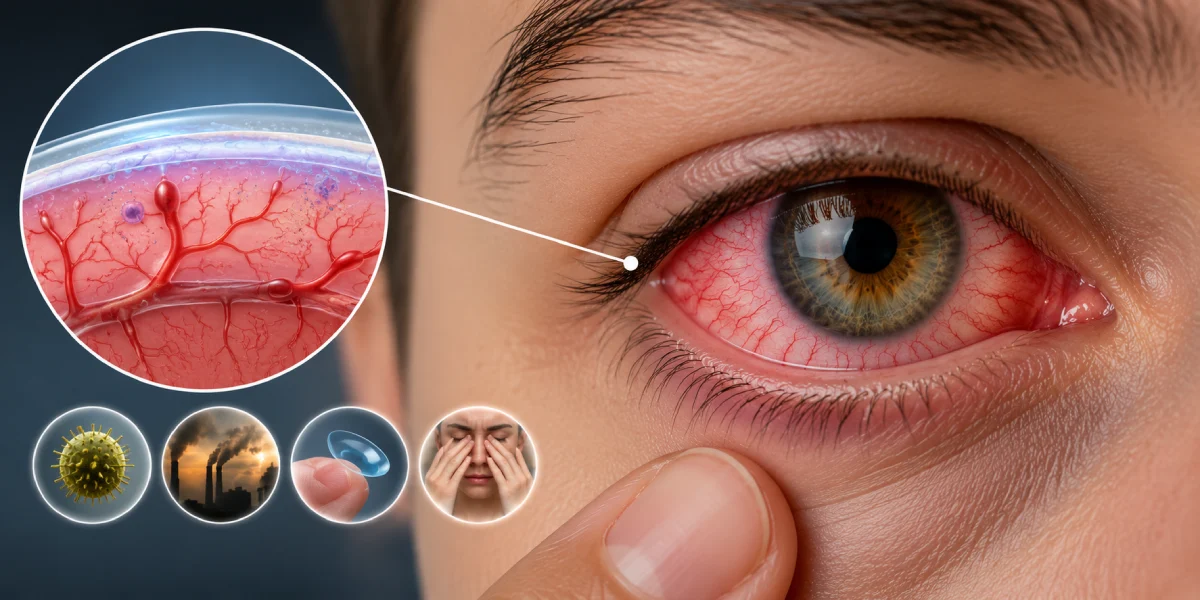
The white part of your eye — the sclera — is covered by a thin, transparent membrane called the conjunctiva. This membrane contains tiny blood vessels. When these vessels become irritated or inflamed, they expand and become visible, giving your eye that characteristic pink or red appearance.
Redness can affect one eye or both. It may come with other symptoms like itching, watering, burning, or blurred vision — or it may appear completely on its own.
Common Causes of Red Eyes
1. Eye Allergies
If your eyes turn red and itchy at certain times of year, or after exposure to dust, pollen, smoke, pet dander, or cosmetics — allergies are likely the cause. The redness is usually accompanied by watering and a strong urge to rub your eyes.
Rubbing may feel satisfying in the moment, but it makes things significantly worse. It releases more histamine into the tissue, which intensifies the allergic response.
2. Dry Eyes
Dry eye is far more common than most people realise — and it is becoming more prevalent with increasing screen use. When your eyes do not produce enough tears, or when tear quality is poor, the surface of the eye becomes irritated and red.
You might notice a burning or gritty sensation, as if something is in your eye, along with occasional blurred vision that clears when you blink. Paradoxically, dry eyes can also cause excessive watering — your eye tries to compensate by flooding with reflex tears.
If you spend long hours on screens and your eyes consistently feel dry and tired by the end of the day, this is worth addressing properly rather than relying on over-the-counter drops.
3. Conjunctivitis (Pink Eye)
Conjunctivitis — commonly called pink eye — is inflammation of the conjunctiva. It can be caused by a viral infection, a bacterial infection, or an allergic reaction.
Viral conjunctivitis often accompanies a cold and usually clears on its own. Bacterial conjunctivitis tends to produce a thicker, yellowish discharge and may require antibiotic treatment. Allergic conjunctivitis comes with intense itching and is linked to known allergens.
One important thing to understand: conjunctivitis spreads easily. If you or your child has it, wash hands frequently and avoid sharing towels or pillowcases.
4. Digital Eye Strain
Long hours on computers, phones, or tablets significantly reduce how often we blink — from around 15 times per minute to as few as 5. Less blinking means less moisture on the surface of the eye, leading to dryness, irritation, and redness by the end of the day.
The 20-20-20 rule helps: every 20 minutes, look at something 20 feet away for 20 seconds. It is simple, it costs nothing, and it genuinely makes a difference. According to Cleveland Clinic, redness can develop gradually over time or appear suddenly — and in many cases, improve significantly with basic lifestyle changes like regular screen breaks and adequate sleep.
5. Contact Lens Irritation
Wearing contact lenses for longer than recommended, using lenses past their replacement date, or poor lens hygiene are common triggers for red eyes. Lenses that are not properly cleaned can harbour bacteria and significantly increase infection risk.
If your eyes consistently feel uncomfortable after putting in your lenses, do not ignore it. This is your eye telling you something is wrong.
6. Foreign Body in the Eye
Dust, sand, an eyelash — even something as small as a speck of dirt can cause sudden, intense redness and irritation. The natural response is to rub, but this can scratch the corneal surface and worsen the situation.
If blinking and gentle flushing with clean water do not relieve the discomfort within a few minutes, see a doctor.
Home Care — What Actually Helps
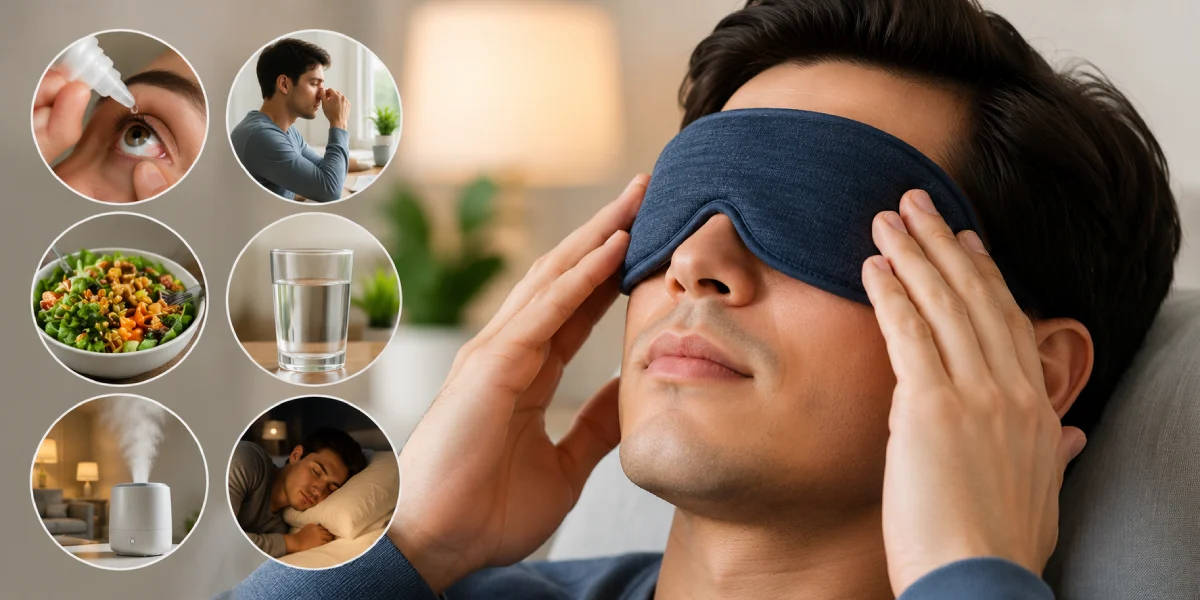
For mild, non-infectious redness, these measures genuinely help:
- Follow the 20-20-20 rule during screen use
- Use preservative-free lubricating drops if your eyes feel dry — but only use them as directed
- Wash your hands before touching your eyes
- Remove contact lenses if your eyes feel uncomfortable
- Stay hydrated and get adequate sleep
- Protect your eyes from dust and pollution when outdoors
What You Should Not Do
This is just as important as what you should do.
Do not use steroid eye drops without a prescription. Steroid drops are commonly available over the counter, and many people self-prescribe them for red eyes. This is dangerous. Unsupervised steroid use can raise eye pressure, accelerate cataract formation, and worsen certain infections. They should only ever be used under medical supervision.
Do not rub your eyes. It feels relieving but causes more harm — especially if there is an infection or a foreign body involved.
Do not ignore redness that persists beyond a few days. As All About Vision notes, if you suddenly develop red eyes or have redness lasting more than 24 to 48 hours, visiting an eye doctor to determine the cause is the right step — rather than relying on over-the-counter remedies.
When Should You See an Eye Specialist?
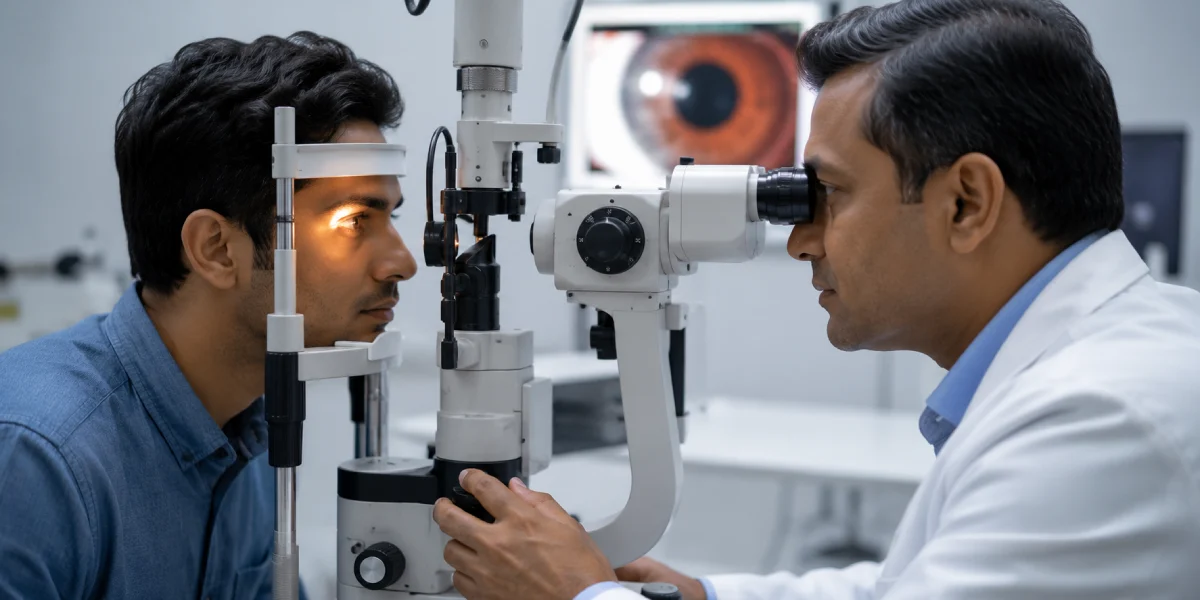
You should book an appointment if:
- Redness has persisted for more than three to four days without improvement
- You have eye pain — not just irritation, but actual pain
- Your vision has changed or become blurred
- You are sensitive to light
- There is significant discharge, especially thick or yellow discharge
- You have had an eye injury
- Redness keeps coming back repeatedly
If you experience sudden severe pain with redness, nausea, and blurred vision — go to an eye clinic immediately. This combination can indicate acute angle-closure glaucoma, which is a medical emergency.
For patients in Karnal and surrounding areas experiencing persistent red eyes, a comprehensive eye examination at a trusted eye hospital in Karnal is the right first step toward identifying the cause and getting proper treatment.
Understanding Glaucoma-Related Redness
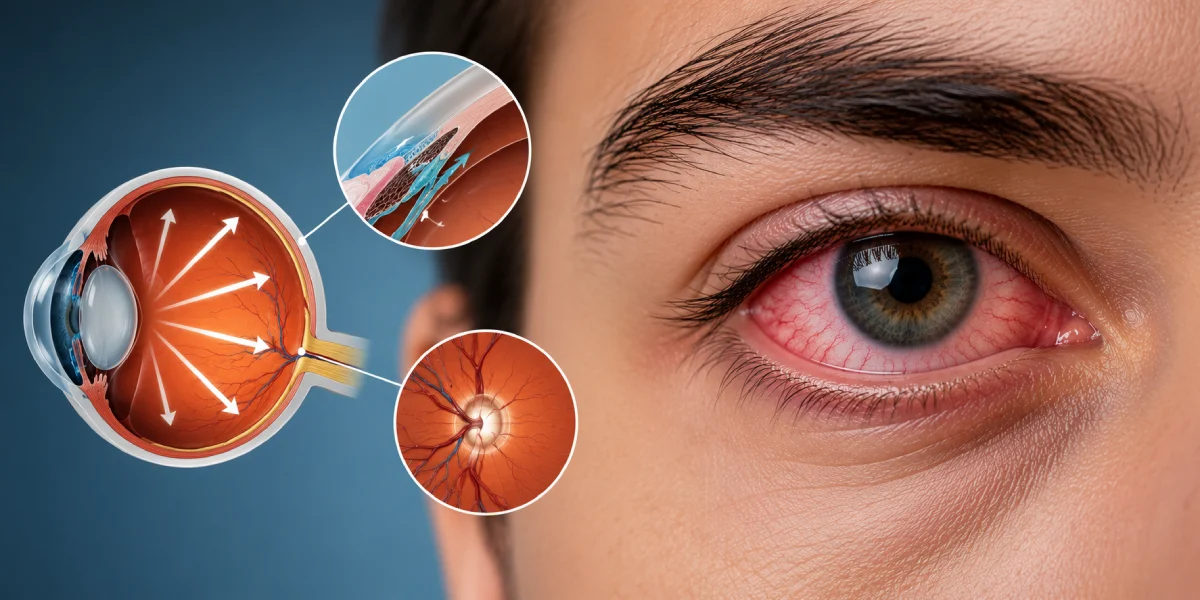
One cause of red eyes that deserves special attention is glaucoma — particularly the acute angle-closure type. Unlike the more common open-angle glaucoma, which develops silently, acute angle-closure glaucoma can cause a sudden, painful red eye with nausea and vision loss. If you want to understand more about this condition, our detailed guide on glaucoma causes and treatment explains the different types, warning signs, and when to seek emergency care.
Final Thoughts
Most red eyes are harmless and resolve with simple measures. But your eyes are not something to gamble with. If redness is persistent, painful, or affecting your vision — please do not rely on guesswork or over-the-counter drops.
At Dr Rishi Eye Institute, Karnal, we see patients with all kinds of eye concerns — from routine dryness and allergies to complex infections and glaucoma. If your eyes are consistently red or uncomfortable, come in for a proper evaluation. Early diagnosis almost always leads to better outcomes.
