
Pterygium Eye: Causes, Symptoms, Treatment and Prevention Guide
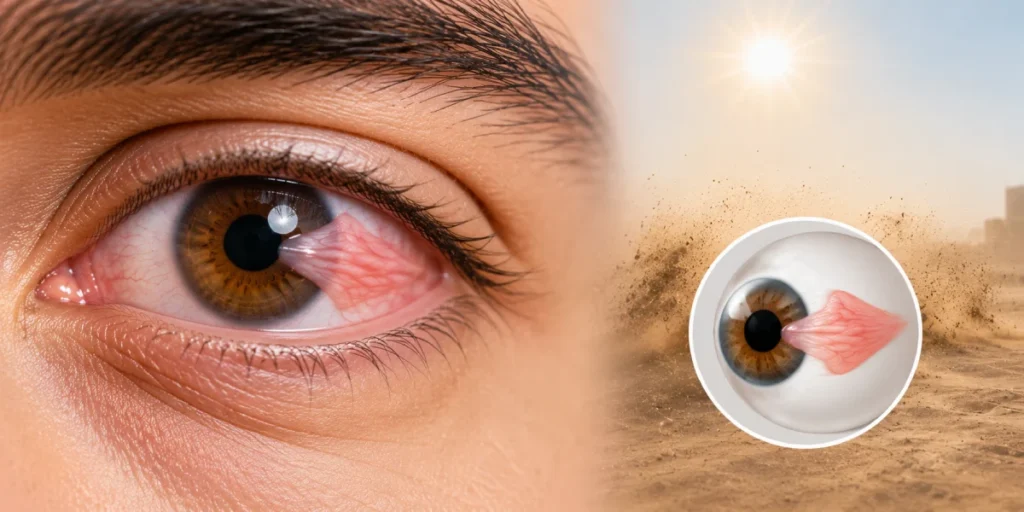
You might have noticed it in the mirror — a small, fleshy, pinkish growth creeping in from the corner of your eye toward the centre. It does not hurt at first. Maybe it has been there for months. You have been ignoring it, hoping it would go away on its own.
It will not.
What you are likely looking at is a pterygium — pronounced “teh-RIJ-ee-um” — and while it sounds alarming, it is one of the more manageable eye conditions when caught and treated at the right time. I see patients at Dr Rishi Eye Institute who have lived with it for years without realising what it was or what it could eventually do to their vision.
This guide will walk you through everything you need to know.
What Is Pterygium?

Pterygium is a non-cancerous growth of conjunctival tissue — the thin membrane that covers the white part of your eye. It usually starts from the inner corner of the eye and gradually extends toward the cornea, the clear dome at the front of your eye that you see through.
It is sometimes called “Surfer’s Eye” because it is extremely common in people who spend a lot of time outdoors — surfers, farmers, construction workers, drivers — anyone who gets prolonged exposure to sunlight, wind, and dust.
The growth is benign, meaning it is not cancer and will not spread to other parts of the body. But that does not mean you can ignore it. If it grows large enough to reach the cornea, it can distort your vision in ways that are difficult to reverse without surgery.
What Causes Pterygium?
The exact mechanism is not fully understood, but the risk factors are well established.
UV Radiation is considered the primary cause. Long-term exposure to sunlight — particularly ultraviolet light — damages the conjunctival tissue and triggers abnormal growth. This is why pterygium is far more common in people who spend their working lives outdoors.
Dust and wind exposure are significant contributors. Farmers, construction workers, and people in rural or desert environments face a higher risk due to constant environmental irritation.
Chronic dry eye plays a role too. When your eyes are consistently dry and irritated, the conjunctiva responds by attempting to grow protective tissue — which can become a pterygium over time. If you already experience persistent dryness or burning in your eyes, you may want to read our guide on digital eye strain and dry eyes to understand how screen habits and environmental factors combine to affect eye health.
Environmental pollution — smoke, chemical fumes, harsh climates — can also increase susceptibility in people already prone to the condition.
What Are the Symptoms?
Pterygium does not always cause obvious symptoms in its early stages — which is part of why people miss it for so long. As it develops, you may notice:
- A visible, fleshy, wedge-shaped growth on the white of your eye
- Persistent redness, especially in the inner corner
- A burning or irritating sensation
- The feeling that something is in your eye — even when nothing is there
- Dryness or excessive watering
- Blurred or distorted vision in more advanced cases
The redness that pterygium causes is worth understanding properly. It can easily be confused with other causes of red eyes — allergies, infections, or irritation from contact lenses. Our detailed guide on red eye causes and treatment explains how to tell the difference and when each type of redness needs professional attention.
Can It Affect Your Vision?

Yes — and this is where many patients are surprised.
A small pterygium that stays near the edge of the cornea may never affect vision at all. But if it continues to grow inward, it can:
- Cause significant astigmatism by distorting the corneal shape
- Lead to blurred or double vision
- Eventually, cover the visual axis — the central area you look through — in severe cases
This is why regular monitoring matters. You and your eye specialist need to watch how quickly it is growing and whether it is heading toward the visual axis.
How Is It Diagnosed?
Diagnosis is straightforward. Your eye doctor will examine the eye using a slit lamp — a specialised microscope — to assess the size, position, and extent of the growth. They will also check whether the cornea has been affected and evaluate your overall eye health.
In most cases, this is a quick, painless examination that gives a clear picture of what is happening.
Treatment Options
Treatment depends entirely on how far the pterygium has progressed and what symptoms it is causing.
Conservative Management is appropriate for small, stable pterygiums that are not affecting vision. This includes:
- Lubricating eye drops to manage dryness and irritation
- UV-protective sunglasses whenever you are outdoors
- Regular monitoring to track any changes in size or position
Surgical Removal is recommended when:
- The pterygium is growing toward or onto the cornea
- Vision has become affected
- Irritation is persistent and affects daily life
- The appearance is causing significant concern
Modern pterygium surgery uses a technique called conjunctival autografting, where a small piece of healthy tissue from another part of your eye is used to cover the area after removal. This significantly reduces the risk of recurrence compared to older techniques.
Surgery is usually performed as a day procedure under local anaesthesia. Recovery takes a few weeks, during which prescribed drops must be used regularly.
One question I am asked often is whether pterygium grows back after surgery. The honest answer is — it can, particularly if you continue to have heavy sun and dust exposure after the procedure. However, with modern grafting techniques and proper post-operative protection, recurrence rates are much lower than they used to be.
How to Prevent Pterygium

Prevention comes down to protecting your eyes from the things that cause them in the first place.
- Wear UV-protective sunglasses every time you step outside — not just on sunny days. UV radiation penetrates cloud cover.
- Use a hat or cap with a brim when working or spending time in strong sunlight.
- Manage dry eyes — if you have chronic dryness, treat it properly rather than letting irritation persist.
- Protect your eyes from dust and wind — safety glasses or wraparound frames help significantly for outdoor workers.
- Get regular eye check-ups, especially if you work outdoors or have already been told you have a small pterygium.
Eye protection becomes even more important as you get older, since UV damage accumulates over decades. Our guide on eye care tips for older adults covers how regular eye screenings and simple protective habits can prevent a range of conditions — pterygium included — from affecting your quality of life.
Final Thoughts
Pterygium is common, manageable, and — when caught early — rarely causes permanent vision problems. But it does not go away on its own, and it does not stop growing without intervention.
The most important thing you can do is have it properly assessed, monitored, and treated at the right time. At Dr Rishi Eye Institute, Karnal, we evaluate and treat pterygium using modern techniques, with a focus on preventing recurrence and protecting your long-term vision.
If you have noticed something growing on your eye, or if you work outdoors and have never had a comprehensive eye examination — please come in. Your eyes deserve proper care.
