
Squint in Children: Early Treatment for Better Vision
As a parent, you notice everything about your child. The way they laugh, the way they hold their pencil, the way they scrunch up their face when they are trying to read something far away. But there is one thing that many parents miss — or choose not to worry about — and that is when one of their child’s eyes is not looking in quite the same direction as the other.
I see this regularly at Dr Rishi Eye Institute. A parent brings in a child, often at the insistence of a teacher or relative who noticed something. And the first thing they say is: “We thought they would grow out of it.”
Most of the time, they do not. And the longer a squint goes untreated in a child, the harder it becomes to correct — not just the eye alignment, but the vision itself.
What Is Squint — And Why Does It Happen?

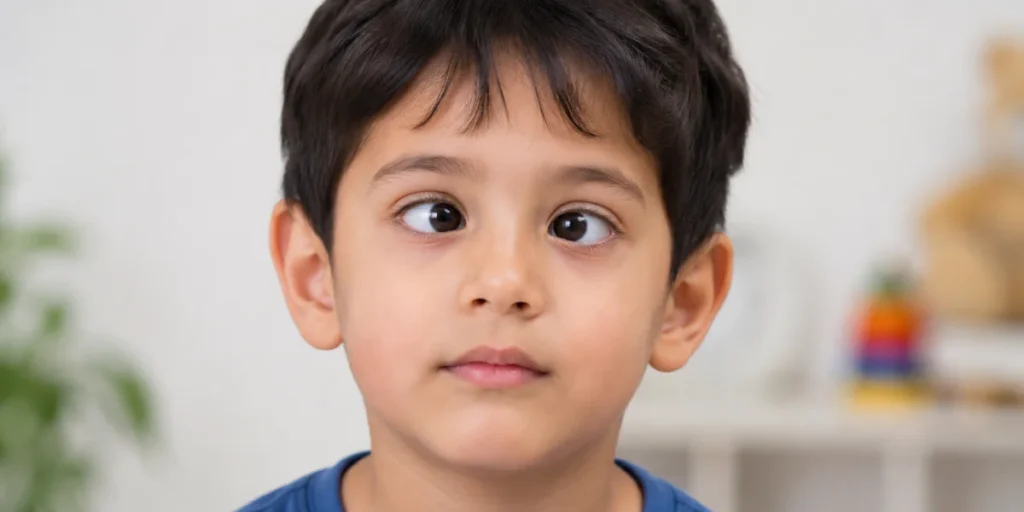
Squint, medically known as strabismus, is a condition where both eyes do not point in the same direction at the same time. One eye may look straight ahead while the other turns inward, outward, upward, or downward.
It is not a muscle weakness in the way most people imagine. Squint happens because the brain and the eye muscles are not coordinating properly. Sometimes it is present from birth. Sometimes it develops in the first few years of life. Occasionally, it appears suddenly after an illness or injury.
In young children, squint is more common than many parents realise. And while it may seem like a cosmetic issue — something that only affects how the eye looks — the reality is far more serious.
Why Early Detection Matters So Much
Here is something that surprises many parents when I explain it: a child’s visual system is still developing until around the age of seven or eight. During this window, the brain is actively learning how to process what each eye sees.
When one eye is misaligned, the brain receives two different images. To avoid confusion, it does something clever but ultimately harmful — it starts ignoring the signal from the weaker or misaligned eye. Over time, this causes a condition called amblyopia, commonly known as lazy eye.
This is why the age at which treatment begins matters so enormously. A child treated before the age of five has a significantly better chance of developing full, normal vision in both eyes than one treated at ten or twelve.
If you have noticed something unusual about your child’s eyes, the most important thing you can do right now is book a proper eye examination. Our detailed guide on eye care tips for older adults explains how eye conditions at any age — including childhood — respond dramatically better to early intervention than to delayed treatment.
The Impact on Confidence — Something We Do Not Talk About Enough
Vision is not the only thing affected by an untreated squint. I have seen children who avoid eye contact, who stop raising their hands in class, who become quieter and more withdrawn as they get older. Not because of their personality — but because they are self-conscious about their eyes.
Children notice when other children look at them differently. They hear comments. They see themselves in photographs. A visible squint during the school years can significantly affect a child’s self-esteem, their willingness to participate socially, and their confidence in communication.
When treated early — before these patterns of self-consciousness set in — children do not just gain better vision. They gain confidence. They make eye contact more easily. They engage more freely with the world around them.
Signs Every Parent Should Know

You do not need to be an eye specialist to notice these warning signs. If you see any of the following in your child, do not wait — schedule an eye examination:
- One eye turning inward, outward, upward, or downward
- Frequent head tilting or turning to one side
- Closing one eye in bright sunlight
- Complaints of double vision or headaches after reading
- Difficulty judging distances — bumping into things, trouble catching a ball
- Eyes that do not seem to move together smoothly
Some children with a squint never complain of any discomfort — because the brain has already suppressed the vision in the affected eye. The absence of symptoms does not mean the absence of a problem.
For a broader understanding of how different eye conditions present in children and adults, our guide on red eye causes and treatment covers how to distinguish between symptoms that need urgent attention and those that can be monitored.
Treatment Options for Squint
The good news is that squint is treatable — and the range of options available today is much wider than most people realise.
Prescription Glasses In many children, squint is caused or worsened by an uncorrected refractive error — short-sightedness, long-sightedness, or astigmatism. Correcting the vision with glasses sometimes resolves the squint entirely, without any further intervention.
Eye Patching: If amblyopia has developed — if the brain has started ignoring one eye — patching the stronger eye forces the brain to use and strengthen the weaker one. This works remarkably well when started early enough.
Vision Therapy: Structured eye exercises can help train the eyes to work together. This is often used alongside other treatments to reinforce the gains made.
Squint Surgery: When glasses and patching are not sufficient to correct the alignment, surgery is recommended. The procedure adjusts the tension in the eye muscles to bring the eyes into proper alignment. It is performed under general anaesthesia in children and is a well-established, safe procedure with excellent outcomes when performed by an experienced surgeon.
Surgery does not always eliminate the need for glasses or patching — in many cases, these continue afterwards to maintain and build on the results. The goal is always the best possible vision and alignment for each child.
What Happens If Squint Is Left Untreated?

This is the question I wish more parents would ask before it becomes too late to ask it.
Untreated squint in a child leads to amblyopia in the suppressed eye — and amblyopia that develops during the critical years and goes uncorrected can result in permanently reduced vision. No glasses, no surgery later in life, will fully restore what was lost during those developmental years.
Beyond vision, an uncorrected squint affects depth perception, making activities like sports, driving, and certain careers genuinely difficult in adulthood.
When Should You Bring Your Child In?
If your child is showing any of the signs mentioned above — or if you simply have a feeling something is not right — please do not wait for the next school health check or the next annual appointment.
Children’s eyes can be examined at any age. Even infants can be assessed if there is a concern. An early eye checkup for kids at a specialist centre is the single most important step you can take to protect your child’s vision and confidence.
At Dr Rishi Eye Institute, Karnal, we provide comprehensive pediatric eye evaluations and advanced treatment for squint and amblyopia. Our team works with children and their families to create a treatment plan that fits their needs, explains every step clearly, and supports the child through the process with care and patience.
Final Thought

A squint is not something your child will grow out of on their own. But with the right treatment, started at the right time, it is something they can leave behind entirely — along with the vision problems, the self-consciousness, and the limitations it might otherwise have placed on their future.
If you have any concerns about your child’s eyes, do not wait. Come in. Let us take a look together.
