

Glaucoma Treatment in Karnal
Concerned about glaucoma treatment in Karnal? Dr Rishi Eye Institute is home to some of the most experienced glaucoma specialists in Karnal, offering comprehensive diagnosis and management — from early detection to advanced glaucoma surgery in Karnal — helping protect your eyesight before irreversible damage occurs. As a leading glaucoma hospital in Karnal, our team of skilled glaucoma doctors in Karnal uses modern diagnostic technology to accurately measure eye pressure and track optic nerve health, so glaucoma can be managed effectively over the long term.
Whether you’re looking for a routine glaucoma test in Karnal, a second opinion on your current treatment, or advanced glaucoma laser treatment in Karnal, our glaucoma clinic in Karnal is equipped to handle every stage of the condition — from open-angle glaucoma to angle-closure glaucoma and more complex secondary glaucoma cases. As one of the most trusted glaucoma eye care centers in Karnal, we combine precise diagnostics with a personalized treatment plan for every patient.
What is Glaucoma?
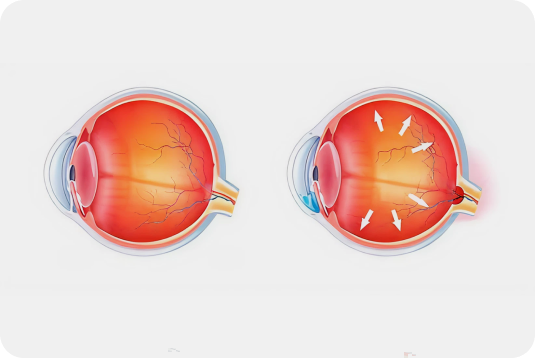
Glaucoma is a group of eye conditions that damage the optic nerve, most often due to elevated eye pressure, and is one of the leading causes of irreversible blindness worldwide if left untreated. Since early-stage glaucoma typically has no noticeable symptoms, regular glaucoma tests in Karnal are essential — especially for individuals over 40, those with a family history of glaucoma, or people managing diabetes and high blood pressure. As a trusted glaucoma specialist in Karnal, Dr Rishi Eye Institute recommends routine eye pressure checks as part of a broader eye health strategy, since early diagnosis is the single biggest factor in preventing vision loss from glaucoma.
Types of Glaucoma
1. Open-Angle Glaucoma (Most Common)
2. Angle-Closure Glaucoma
3. Normal-Tension Glaucoma
4. Congenital Glaucoma
5. Secondary Glaucoma
Risk Factors for Glaucoma
You are at higher risk if you have:

Tests to Diagnose Glaucoma
1. Tonometry
Measures eye pressure (IOP)
2. OCT
Checks optic nerve damage
3. Visual Field Test
Detects loss of peripheral vision
4. Gonioscopy
Examines drainage angle of the eye
5. Pachymetry
Measures corneal thickness
6. Fundus Examination
Direct evaluation of optic nerve
Frequently Asked Question:
What is the main cause of glaucoma?
The main cause is increased eye pressure, but it can also occur with normal pressure due to optic nerve weakness.
Can glaucoma be cured?
No, glaucoma cannot be cured, but it can be controlled to prevent further vision loss.
What are the early symptoms of glaucoma?
At what age should I get checked for glaucoma?
Everyone above 40 years should get regular eye checkups.
Is glaucoma hereditary?
Yes, having a family history significantly increases your risk.
Inspiring Stories!
Dr rishiraj Singh and his all staff are so cooperative. This eye hospital is doing great job and giving people best treatment.thanks to all team.
Have visited doctor for treatment of allergy in my 5 year old kid's eye. Doctor is very patient . Clinic is clean, staff is helpful and follow covid 19 protocols. Always a satisfying experience.
Dr rishi eye institute is a very good hospital.all staff and dr rishi raj singh very good surgeon.
Hi, I am Dr Baldev Makhija. I have got my laser operation done for Cataract by Dr. Rishi Eye institute. It got operated on 28th January. He did the surgery so well that my bandage was open the next day itself. Now my eyesight is as good that i can see the objects near, medium and far very clearly. I am very thankful to Dr. Rishi for bringing the new sight in my eyes. 5 star rating for him..
Make An Appointment
For any kind of eye surgery or eye- checkup you do not need to go anywhere, you just need to make an appointment with our specialists and you will get answer of every eye-related problem.
- 0184-4076760, 7015680440
- 1363/64, Sector-6 Karnal, Haryana - 132001
- Mon - Sun: 09:00 AM - 07:00 PM