

Digital Eye Strain: Causes, Symptoms, and Simple Solutions
Let me ask you something, honestly. How many hours a day do you spend looking at a screen?
If you are like most people I see at Dr Rishi Eye Institute, the answer is probably more than you would like to admit. Between office work, smartphones, online classes, and evening television, many of us are clocking anywhere between 8 and 12 hours of screen time every single day.
And our eyes are paying the price.
There is a condition called Computer Vision Syndrome — or Digital Eye Strain — and it is becoming one of the most common eye complaints I hear from patients. The good news is that it is manageable. But first, you need to understand what it actually is and why it happens.
What Is Computer Vision Syndrome?

Computer Vision Syndrome (CVS) is not a single condition — it is a collection of eye and vision problems that develop from prolonged use of digital screens. Computers, smartphones, tablets, e-readers — all of them contribute.
Studies suggest that Computer Vision Syndrome affects nearly 50 to 90 per cent of people who spend long hours working on digital screens every day. That is not a small number — that is almost everyone sitting at a desk.
The reason screens are harder on your eyes than reading a printed book comes down to how your eyes process digital content. Digital screens have lower contrast, produce more glare, and require your eyes to constantly shift focus — hour after hour. Over time, that sustained effort wears your eyes down in ways most people never connect to their screen habits.
Symptoms You Should Not Ignore
The tricky part about CVS is that its symptoms feel completely ordinary. Most people brush them off as tiredness or stress. But if you are experiencing these regularly, your screen habits may be the real cause:
- Eye strain and heaviness by the end of the day
- Dry, burning, or itchy eyes
- Blurred or double vision after prolonged screen use
- Frequent headaches — especially around the eyes or forehead
- Redness or watering of the eyes
- Neck, shoulder, or upper back pain
- Difficulty shifting focus between the screen and other objects
- Increased sensitivity to light
These symptoms may disappear after rest — but if you are back on a screen the next morning, they return. Over time, that cycle takes a real toll on your comfort and productivity. If these symptoms are becoming regular, visiting an eye specialist in Karnal for a proper evaluation is the right step.
Why Does This Actually Happen?
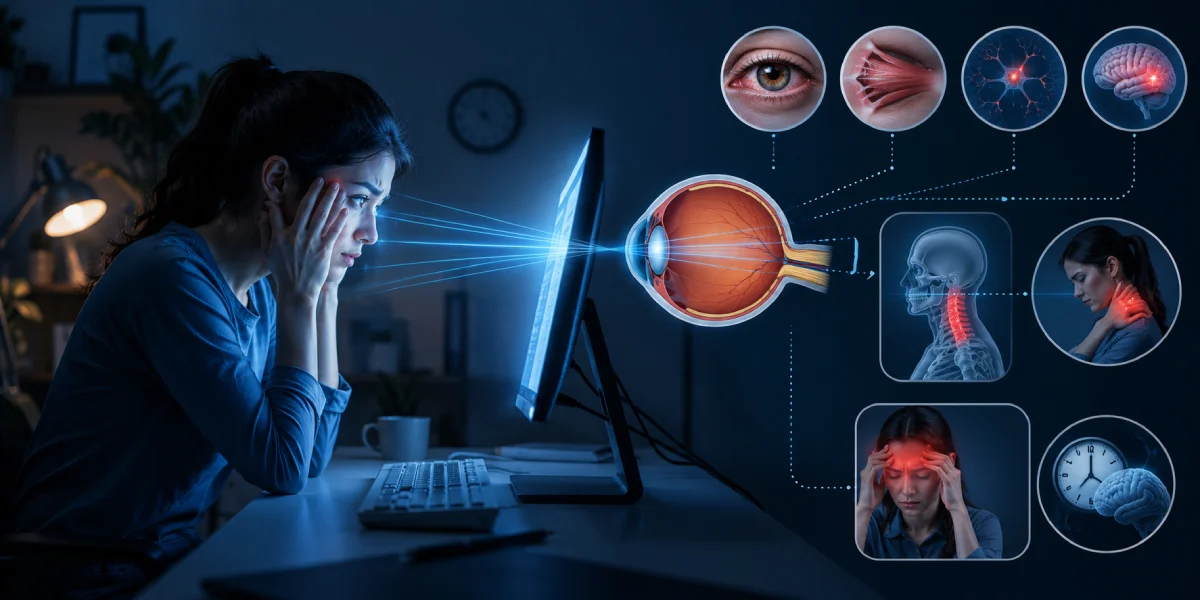
Understanding the cause helps you fix the problem properly. Here are the main reasons your eyes struggle with screens:
You stop blinking. Normally, we blink around 15 to 20 times per minute. In front of a screen, it drops to as few as 5 to 7 times per minute. Less blinking means less moisture on the surface of your eye — and that leads directly to dryness and irritation.
Your eye muscles work overtime. Continuous close-up focus tires out the muscles that control your lens. Think of it like holding your arm extended for hours — eventually, the muscle fatigues completely.
Glare and poor lighting add to the stress. A bright screen in a dim room, or reflections from windows and overhead lights, force your eyes to constantly adjust — adding unnecessary strain on top of an already tired system.
Uncorrected vision problems make it worse. If you have even mild myopia, hyperopia, or astigmatism that has not been properly corrected, screen use amplifies the discomfort significantly. According to WebMD, many people do not realise they have a refractive error until screen-related symptoms push them to get an eye test.
Children and Screen Time: A Growing Concern
I want to spend a moment on this because it worries me more than almost anything else I see in practice.
Children today are being exposed to screens younger than ever — tablets for learning, smartphones for entertainment, and computers for school assignments. Their eyes are still developing, which makes them particularly vulnerable to digital eye strain.
But beyond CVS, excessive screen time in children is also linked to the rapid rise of myopia — nearsightedness — in young people globally. Research shows that childhood myopia rates have increased dramatically over the past two decades, with excessive screen use and reduced outdoor time identified as key contributing factors.
If your child is squinting at screens, complaining of headaches after online classes, or sitting unusually close to the television — do not ignore it. An early eye checkup for kids can catch problems before they become serious.
Practical Steps That Actually Help
The good news is that Computer Vision Syndrome is very manageable with the right habits. Here is what I recommend to my patients:
Follow the 20-20-20 Rule. Every 20 minutes, look at something at least 20 feet away for 20 seconds. This simple habit relaxes your focusing muscles and gives your eyes a genuine break. Set a reminder on your phone — it works better than you think.
Blink consciously. It sounds strange, but actively reminding yourself to blink during screen use makes a measurable difference in eye moisture and comfort.
Position your screen correctly. Keep it about an arm’s length away — roughly 50 to 70 centimetres — and slightly below your eye level. Looking slightly downward reduces the exposed surface area of your eye, which slows moisture evaporation.
Sort out your lighting. Avoid working with a bright window directly behind your screen. Reduce overhead glare. Match your screen brightness to the ambient light in the room — your eyes should not have to fight the contrast.
Use lubricating eye drops if needed. If dryness is persistent, preservative-free artificial tears can provide real relief. Do not use drops without medical advice, though — not all eye drops are suitable for all situations.
Get your eyes tested regularly. According to the American Optometric Association, an outdated glasses prescription is one of the most common and most overlooked reasons for severe digital eye strain. A current, accurate prescription makes an enormous difference.
When Should You See an Eye Specialist?

Most CVS symptoms improve with better habits and rest. But you should book an appointment if:
- Headaches or blurred vision persist even after reducing screen time
- Your eyes feel consistently dry or painful
- You are having difficulty focusing on everyday tasks
- Symptoms are affecting your work, studies, or daily life
According to Mayo Clinic, prolonged untreated eye strain can worsen underlying vision problems and significantly affect quality of life — making professional evaluation important when symptoms do not resolve on their own.
Protect Your Eyes — They Have to Last a Lifetime
Screens are not going away. But how you use them — and how proactively you care for your eyes — makes all the difference.
Small, consistent habits like the 20-20-20 rule, proper screen positioning, and regular eye examinations can protect your vision for years to come. Do not wait until the symptoms become severe.
At Dr Rishi Eye Institute, Karnal, we see patients of all ages dealing with digital eye strain — from school children to working professionals. If your eyes have been feeling tired, dry, or strained, come in for a comprehensive eye check-up. We will find the cause and help you fix it.
