
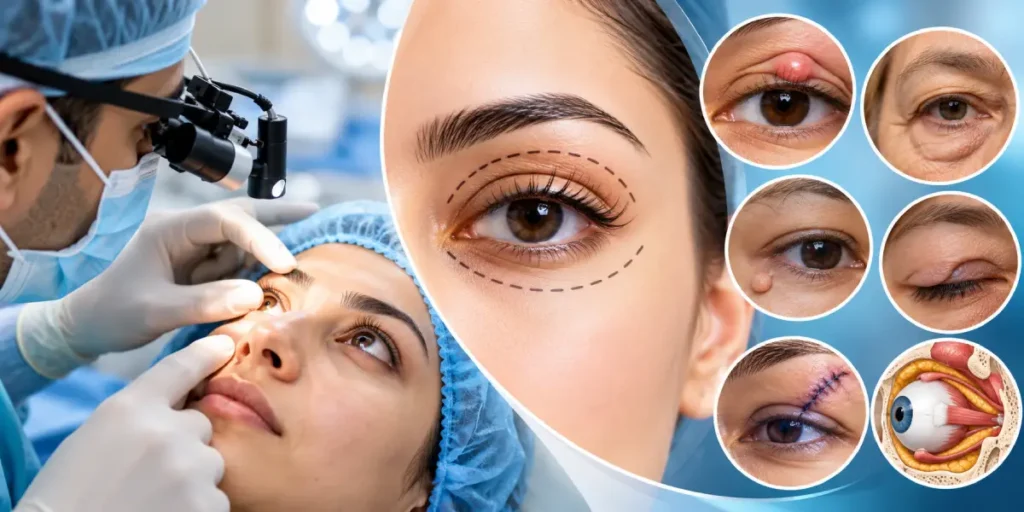
What Is Oculoplasty? Conditions Treated by an Oculoplastic Surgeon
Most people are familiar with cataract surgery, LASIK, or glaucoma treatment. But when someone mentions oculoplasty — or oculoplastic surgery — I often see a blank expression. It is one of the most important subspecialties in eye care, yet one of the least understood outside medical circles.
If you or someone you care about has a drooping eyelid, a blocked tear duct, a growth near the eye, or an eye socket problem, oculoplasty is likely the field that can help you. In this blog, I want to explain clearly what oculoplastic surgery is, which conditions it treats, and when you should consider seeing an oculoplastic surgeon.
What Is Oculoplasty?

Oculoplasty — short for oculoplastic surgery — is a specialised branch of ophthalmology that deals with surgical and medical conditions affecting the structures around the eye. This includes the eyelids, tear ducts, eye socket (orbit), and the surrounding facial tissues.
An oculoplastic surgeon is an ophthalmologist with additional specialised training in plastic and reconstructive surgery specifically around the eye area. This makes them uniquely qualified to treat conditions that sit at the intersection of eye health, eyelid function, and appearance.
Unlike a general plastic surgeon, an oculoplastic surgeon understands the delicate anatomy of the eye and its surrounding structures in exceptional depth. This is critical — because even minor surgical errors in this region can affect vision, eye comfort, and the health of the cornea.
Conditions Treated by an Oculoplastic Surgeon
Oculoplasty covers a surprisingly wide range of conditions. Here are the most common ones I see in clinical practice:
1. Ptosis — Drooping Eyelid
Ptosis is one of the most frequently treated oculoplastic conditions. It occurs when the upper eyelid droops lower than normal due to a weakness in the levator muscle — the muscle responsible for lifting the eyelid. This can affect one or both eyes and can be present from birth (congenital ptosis) or develop with age, injury, or nerve damage.
Ptosis is not just a cosmetic issue. A significantly drooping eyelid can obstruct vision, cause chronic forehead fatigue from constantly raising the brow, and in children, lead to amblyopia (lazy eye) if left untreated. Our detailed blog on how ptosis affects vision and confidence explains this condition in detail.
2. Entropion and Ectropion — Eyelid Turning In or Out
Entropion is a condition where the eyelid turns inward, causing the eyelashes to rub against the surface of the eye. This leads to persistent irritation, redness, watering, and — if left untreated — corneal damage. Ectropion is the opposite: the eyelid turns outward, exposing the inner surface of the lid and leading to dryness, tearing, and eye infection risk.
Both conditions are more common in older adults and are almost always caused by age-related laxity of the eyelid tissues. Both are correctable with a relatively straightforward surgical procedure performed by an oculoplastic surgeon.
3. Blocked Tear Duct — Nasolacrimal Duct Obstruction
If you or your child’s eyes are constantly watering — not due to emotion or irritation, but simply because tears overflow down the cheek — a blocked tear duct may be the cause. The nasolacrimal duct is the channel that drains tears from the eye into the nose. When it is blocked or narrowed, tears accumulate and overflow.
In infants, blocked tear ducts often resolve on their own within the first year of life with massage and observation. In adults, a surgical procedure called Dacryocystorhinostomy (DCR) creates a new drainage pathway for tears, eliminating the watering and the risk of repeated eye infections.
4. Eyelid Tumors and Growths
Growths on or near the eyelid — whether benign cysts, chalazion, papilloma, or malignant tumours like basal cell carcinoma — require careful evaluation and, in many cases, surgical removal. An oculoplastic surgeon is specifically trained to remove these growths while preserving the structure and function of the eyelid, which is critical for protecting the eye’s surface.
Any new or changing growth near your eye should be evaluated promptly. Early diagnosis makes a significant difference in treatment outcomes, particularly for malignant lesions.
5. Orbital Conditions — Eye Socket Problems
The orbit is the bony socket that houses and protects the eyeball. Conditions affecting the orbit include thyroid eye disease (where the eye appears to bulge forward), orbital tumours, orbital fractures from facial trauma, and inflammatory conditions. Oculoplastic surgeons manage these through a combination of medical treatment and surgical intervention, depending on the severity.
Thyroid eye disease in particular is a condition many patients do not connect to their eyes — they notice a change in the appearance of their eyes or eyelids and only later discover the link to thyroid dysfunction. If you have a thyroid condition and have noticed changes around your eyes, please mention it during your eye examination.
6. Blepharoplasty — Eyelid Rejuvenation
Blepharoplasty is the surgical removal of excess skin, fat, or muscle from the upper or lower eyelids. While it is often thought of as a cosmetic procedure, it frequently has a functional purpose too — excess upper eyelid skin can droop low enough to restrict the visual field, making it a genuine medical concern rather than purely an aesthetic one.
An oculoplastic surgeon approaches blepharoplasty with the eye’s health and function as the primary consideration — not just the cosmetic outcome. This distinction matters significantly when choosing who performs the procedure.
Is Oculoplastic Surgery Safe?

Yes — oculoplastic procedures are well-established and have strong safety records when performed by experienced, trained surgeons. Like all surgical procedures, they carry some risk, and outcomes depend significantly on the skill of the surgeon and the thoroughness of the pre-operative evaluation.
At Dr Rishi Eye Institute, oculoplastic services are led by Dr Shikha Pawaiya, our dedicated oculoplastic surgeon. Every patient referred for oculoplastic evaluation undergoes a thorough examination before any treatment is recommended. We assess both the functional and aesthetic aspects of the condition, explain all available options honestly, and ensure you have realistic expectations about outcomes and recovery.
When Should You See an Oculoplastic Surgeon?
You should book an evaluation with an oculoplastic surgeon if you notice any of the following:
- One or both upper eyelids drooping — especially if it is affecting your vision or causing forehead fatigue
- An eyelid that turns inward or outward, causing irritation or exposure of the eye
- Persistent watering of the eye that is not related to dryness or allergy
- A lump, cyst, or growth on or near the eyelid — particularly one that is new, growing, or changing
- Bulging or protrusion of one or both eyes
- Swelling, pain, or a visible change in the eye socket area following an injury
- Excess skin on the upper eyelids that is making it difficult to see upward or is causing heaviness
Many of these conditions are far more treatable when caught early. If you have any concerns about your eyelids, tear ducts, or the area around your eyes, please do not wait for symptoms to worsen before seeking a proper evaluation.
How Oculoplasty Connects to Overall Eye Health

Oculoplastic conditions rarely exist in isolation. A drooping eyelid in a child can lead to amblyopia if not treated promptly. An eyelid turning inward can damage the cornea and cause serious infection. A blocked tear duct leads to recurrent conjunctivitis. Orbital conditions can compress the optic nerve and permanently affect vision.
This is why oculoplastic surgery is not separate from eye care — it is a deeply integrated part of it. At a comprehensive eye care centre like Dr Rishi Eye Institute, oculoplastic conditions are evaluated and managed alongside the full spectrum of eye health — ensuring nothing is missed, and every aspect of your vision and eye comfort is addressed.
Your Eyes Deserve Complete, Specialist Care
Oculoplasty is a field that touches on some of the most visible and personally significant aspects of eye health — how your eyes look, how they function, and how comfortable they feel day to day. Whether the concern is functional, aesthetic, or both, the right specialist can make a meaningful difference.
If you have noticed any changes around your eyes or eyelids, do not dismiss them as minor. Book a comprehensive eye examination at Dr Rishi Eye Institute, Karnal — we are open 7 days a week, walk-ins are always welcome, and our team will give you a thorough, honest evaluation.
