
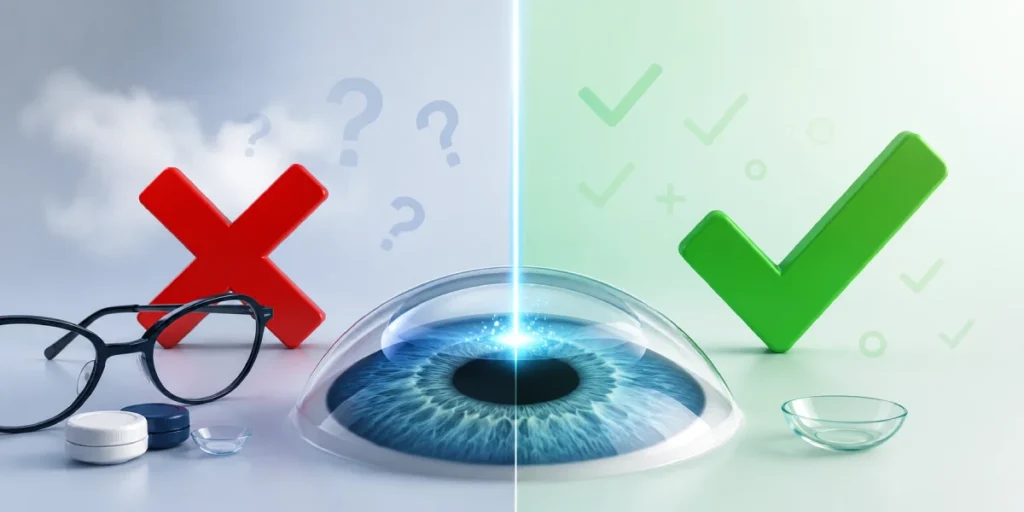
LASIK Surgery Myths vs Facts: What You Really Need to Know
Every week, I speak to patients who have been thinking about LASIK for years — sometimes for a decade or more. And when I ask them what has been holding them back, the answers are almost always the same.
I heard it can cause blindness. I thought the results would not last. “Someone told me the recovery takes months.
None of these things are true. But they are repeated so often, with such confidence, that they have become accepted as fact by people who genuinely deserve better information.
If fear or misinformation has been keeping you from exploring LASIK eye surgery in Karnal, this guide is written specifically for you. Let us go through the most common myths — one by one — and replace them with accurate, honest answers.
Myth 1: LASIK Surgery Is Painful
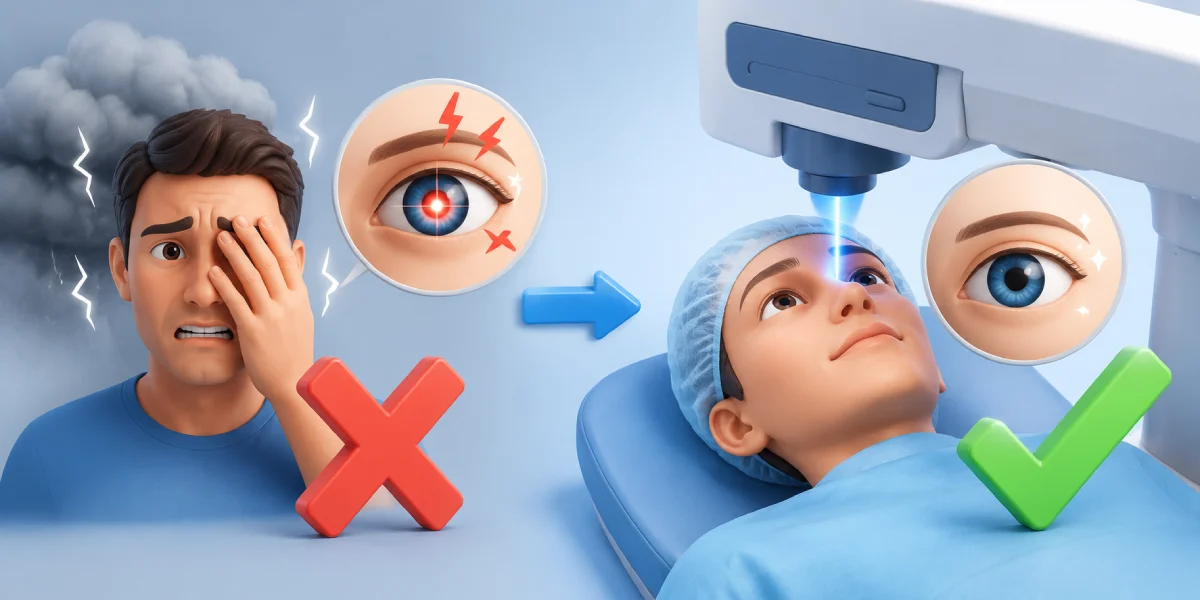
Before the procedure begins, anaesthetic eye drops are applied to completely numb the surface of your eye. You will feel nothing sharp or painful during the surgery. Most patients describe feeling only a brief sensation of mild pressure — lasting a few seconds — when the corneal flap is created.
The laser treatment itself takes just seconds. Mild irritation or watering may occur for a few hours after the procedure, but this is temporary and typically resolves well before the end of the same day. The vast majority of patients are genuinely surprised by how comfortable the experience is.
Myth 2: LASIK Can Cause Blindness
The truth: LASIK does not cause blindness.
This is perhaps the most damaging myth about laser vision correction — and it is simply not supported by evidence. When performed by an experienced ophthalmologist using appropriate technology and on correctly selected candidates, LASIK is one of the safest elective surgical procedures in the world.
Serious complications are extremely rare. The pre-operative evaluation process — which includes corneal mapping, thickness measurement, and a full eye health assessment — exists precisely to identify which patients are suitable and which are not. A thorough evaluation before laser eye surgery in Karnal is the single most important safeguard in the process.
Myth 3: LASIK Results Do Not Last

The corneal reshaping achieved through LASIK is permanent. Once your cornea has been reshaped, it stays that way. The correction does not fade or reverse over time.
What can happen — and what sometimes confuses people — is that natural age-related changes continue to occur in the eye after LASIK, just as they do in people who have never had the procedure. After the age of 40, most people gradually need reading glasses due to presbyopia — a stiffening of the natural lens that affects near focus. This is not a failure of LASIK. It is simply ageing. Similarly, cataracts can develop later in life — but again, this would have happened regardless of whether you had LASIK or not.
Myth 4: Anyone Can Have LASIK
The truth: Not everyone is an ideal candidate — and that is important to know upfront.
LASIK gives outstanding results for the right patients. But patient selection matters enormously. You need to have a stable spectacle prescription, adequate corneal thickness, healthy eyes, and be above 18 years of age with no significant eye disease.
Patients with very thin corneas, significant dry eye disease, keratoconus, or certain systemic conditions may not be suitable for LASIK. For these patients, alternative procedures — such as ICL surgery — may be a better option. Our detailed guide on ICL surgery and vision correction explains who benefits most from each approach and why one size does not fit all in laser vision correction.
Myth 5: Recovery Takes Several Weeks

The truth: Most patients resume normal activities within 24 to 48 hours.
This is one of the biggest surprises for LASIK patients. They expect a long, difficult recovery. What they experience instead is dramatically improved vision by the following morning and a return to work — in most cases — within one or two days.
Complete healing of the corneal flap and full stabilization of vision does take several weeks, and you will need to follow post-operative instructions carefully during this period — using prescribed drops, avoiding eye rubbing, staying away from swimming and dusty environments. But the idea that LASIK requires weeks of rest and recovery is simply incorrect for the vast majority of patients.
Myth 6: LASIK Is Only for Young People
The truth: Age alone does not determine eligibility.
While LASIK is most commonly performed on patients in their twenties and thirties, adults well into their forties and beyond can be excellent candidates — provided their prescription is stable, their eyes are healthy, and the corneal assessment is satisfactory.
The key factors in determining LASIK suitability are eye health, corneal anatomy, and prescription stability — not a number on a birth certificate. If you are older and have been assuming LASIK is not for you, a proper evaluation may tell a very different story.
Myth 7: Contact Lenses Are Safer Than LASIK
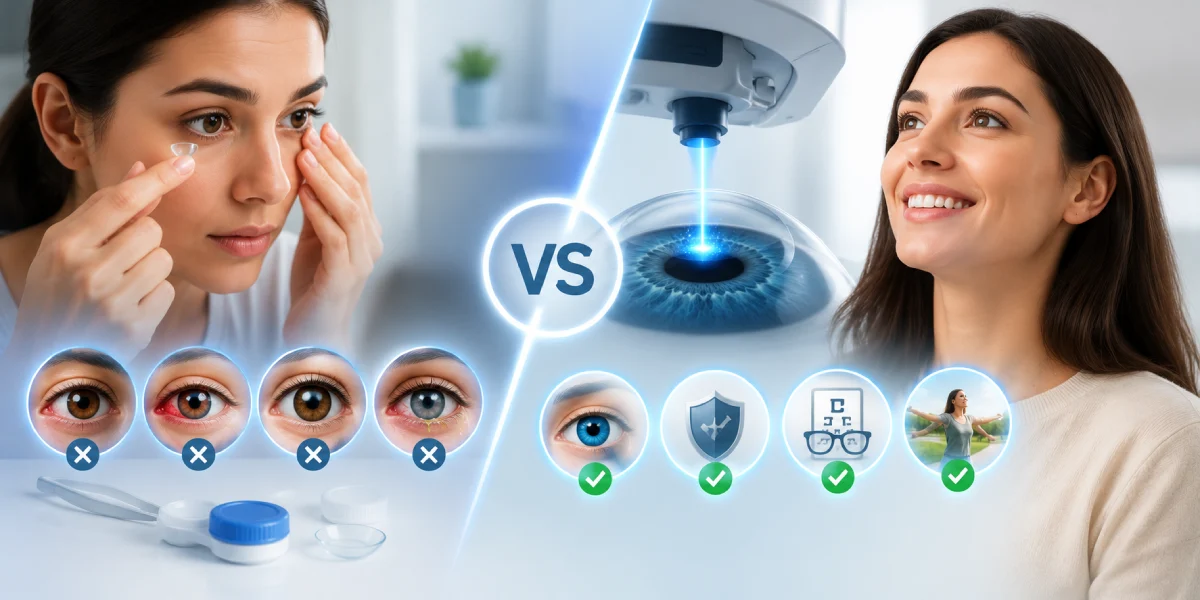
The truth: Long-term contact lens wear carries its own significant risks.
This comparison surprises many people, but it is worth understanding clearly. Extended contact lens wear — particularly if lenses are worn longer than recommended, or hygiene is imperfect — significantly increases the risk of serious eye infections, corneal ulcers, chronic dry eyes, and allergic reactions.
A single episode of bacterial keratitis from contact lens wear can cause permanent corneal scarring and vision loss. These are not hypothetical risks — they are documented outcomes that eye specialists see regularly.
LASIK, when performed on suitable candidates after proper evaluation, eliminates the daily risk associated with contact lens wear entirely. For many patients, LASIK is not just more convenient — it is genuinely the safer long-term choice. If you experience persistent dryness from contact lens use, our guide on dry eyes causes and treatment explains how this affects your candidacy for LASIK and what can be done about it.
Myth 8: LASIK Requires a Hospital Stay
The truth: LASIK is a day-care procedure.
You arrive at the clinic, have the procedure performed — which takes approximately 10 to 15 minutes for both eyes — and go home the same day. There is no hospital admission, no overnight stay, no general anaesthesia. Most patients travel home comfortably with a family member shortly after the procedure is complete.
Myth 9: LASIK Gives Everyone Perfect Vision Instantly
The truth: Results are excellent for most patients, but individual outcomes vary.
The majority of patients achieve 20/20 vision or better after LASIK — often within 24 hours. However, the outcome depends on your individual eye characteristics, your prescription, and how your cornea heals. Some patients achieve better than 20/20. A small number may benefit from a follow-up enhancement procedure to fine-tune the result.
This is why honest, transparent counselling before surgery matters so much. At Dr. Rishi Eye Institute, we discuss realistic expectations with every patient before any decision is made. You should know exactly what LASIK can and cannot achieve for your specific eyes — before you commit to the procedure.
Myth 10: LASIK Is Too Expensive to Be Worth It

The truth: When you calculate the lifetime cost of glasses and contact lenses, LASIK often works out to be more economical in the long run.
Consider what you spend annually on frames, lenses, contact lenses, cleaning solutions, and replacement packs. Multiply that over ten or twenty years. For most patients, the cumulative cost of managing their vision with glasses and contacts significantly exceeds the one-time cost of LASIK — in addition to the years of convenience and freedom that LASIK provides.
The Bottom Line
LASIK is a safe, effective, and permanent solution for the right patient. The myths surrounding it are persistent — but they are not based on modern evidence or the experience of the millions of people who have successfully undergone the procedure.
If you have been putting off a consultation because of something you heard, I would encourage you to come in and get accurate information for your specific situation. A consultation is not a commitment to surgery — it is simply information. And making an informed decision is always better than making a fearful one.
At Dr. Rishi Eye Institute, Karnal, our team provides comprehensive LASIK evaluations and honest, detailed counselling for every patient considering laser vision correction. You can also learn more about our complete range of eye care services in our guide on why Dr. Rishi Eye Institute is Haryana’s most trusted eye hospital.
📞 Call us: +91-7015680440 📍 1363/64, Sector-6, Karnal, Haryana – 132001
