
LASIK Surgery in Karnal: Freedom From Glasses Guide
Imagine waking up tomorrow morning and being able to see the clock across the room clearly. No reaching for glasses on the bedside table. No fumbling with contact lenses before you can face the day. Just clear, natural vision — the moment you open your eyes.
For most people who wear glasses, this sounds like a dream. But for millions of patients around the world, it is simply Tuesday morning. Because they chose LASIK.
I have been performing laser vision correction at Dr. Rishi Eye Institute for years, and the moment that never gets old is when a patient sits up after the procedure and says, with genuine surprise in their voice — “I can see the letters on that chart.” That moment, repeated thousands of times, is why LASIK remains one of the most transformative procedures in modern eye care.
What Is LASIK — And How Does It Actually Work?
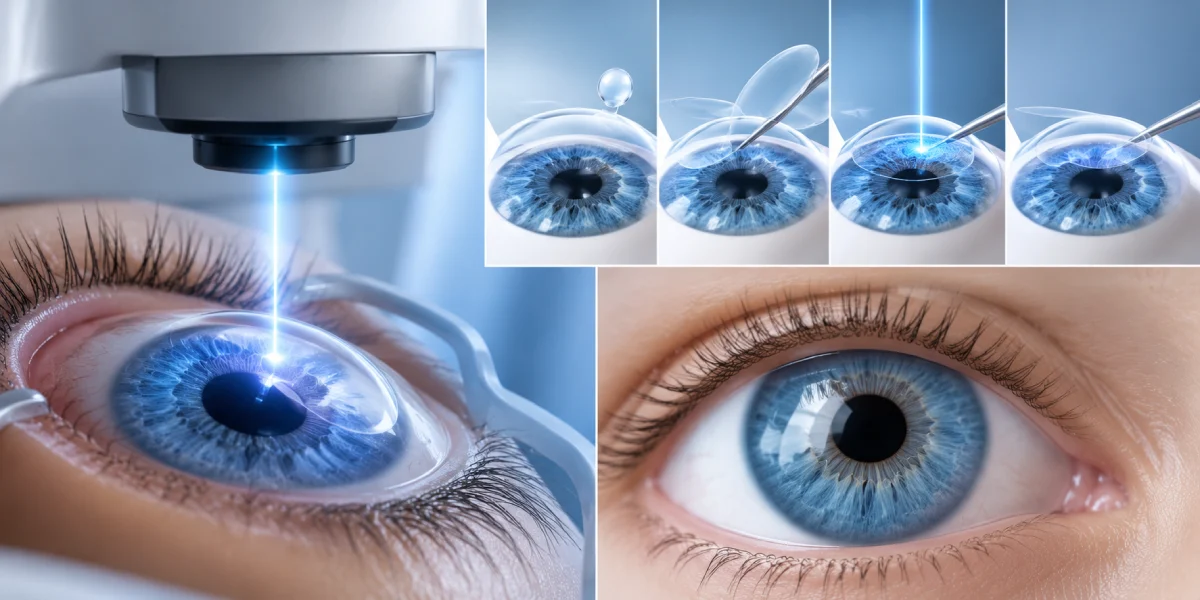
LASIK stands for Laser-Assisted In Situ Keratomileusis. It is a process whereby a laser is used to reshape the cornea, which is the transparent front part of the eye, in such a way that light is focused accurately onto the retina at the back end of the eye.
This process has three distinct stages:
Step 1 — Flap creation. The flap creation procedure can be accomplished with the aid of either a microkeratome or a femtosecond laser that creates a thin and accurate flap on the outer layer of the cornea.
Step 2 — Laser reshaping. An advanced excimer laser, guided by a highly precise computer programme, removes a tiny amount of corneal tissue to reshape the curvature of the eye. For myopia, the cornea is flattened. For hyperopia, it is steepened. For astigmatism, irregular curvature is corrected.
Step 3 — Repositioning the flap. The corneal flap is carefully laid back into its original position, where it adheres naturally — no stitches, no sutures, no bandages required.
The entire procedure takes approximately 10 to 15 minutes for both eyes. The actual laser treatment lasts only a matter of seconds.
Who Is a Good Candidate for LASIK?
This is the most important question — and the one that deserves the most honest answer.
LASIK gives excellent results for the right patient. But not everyone is a suitable candidate, and a reputable surgeon will tell you clearly if you are not.
You are likely a good candidate if you:
- Are 18 years or older, with a stable spectacle prescription for at least one year
- Have myopia (short-sightedness), hyperopia (long-sightedness), or astigmatism within treatable ranges
- Have corneas of adequate thickness and healthy corneal tissue
- Have no significant eye disease and generally good overall health
- Have realistic expectations about what LASIK can achieve
Who Should Not Have LASIK?
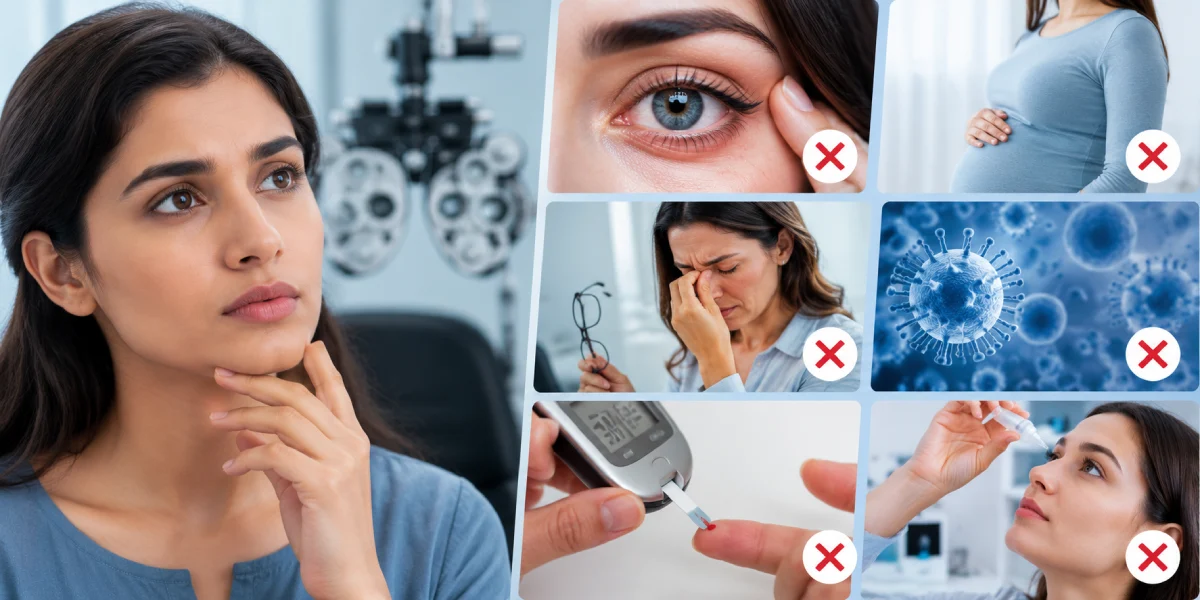
Equally important is understanding when LASIK is not the right choice.
LASIK may not be recommended if you have an unstable spectacle prescription that is still changing, very thin corneas that cannot safely accommodate the reshaping required, significant dry eye disease, pregnancy or breastfeeding, uncontrolled diabetes or certain autoimmune conditions, or corneal disorders such as keratoconus.
None of these mean you cannot have your vision corrected. They mean a different approach may suit you better. ICL surgery — where a lens is implanted inside the eye rather than reshaping the cornea — is an excellent alternative for patients who are not LASIK candidates, particularly those with high powers or thin corneas. You can read more about this option in our detailed guide on ICL surgery for vision correction.
What Are the Benefits of LASIK?
The results speak for themselves. LASIK consistently delivers:
- Permanent freedom from glasses and contact lenses for the vast majority of patients
- Rapid recovery — most patients notice significantly improved vision within 24 hours
- Minimal discomfort — the procedure is essentially painless with anaesthetic drops
- No stitches, no bandages, no hospital admission
- High success rates and consistently high patient satisfaction globally
- The ability to resume most normal activities within one to two days
For many patients, the practical benefits of LASIK go beyond simple convenience. Athletes who cannot safely wear glasses or contacts during sport, professionals who work in environments where glasses are impractical, and people who have simply grown tired of being dependent on corrective lenses for every waking moment — all find that LASIK genuinely changes their daily experience in ways they had not anticipated.
What to Expect During Recovery

Most patients are pleasantly surprised by how smooth and rapid the recovery from LASIK is. Here are some things to expect:
Within the first 24 hours, you may have slightly blurred vision — this is absolutely normal. Within the very next day, most people report significant improvements. You may have some watering of the eye, sensitivity to light, and a feeling like there is something in the eye on the surgery day itself.
During recovery, you should:
- Use your prescribed eye drops exactly as directed — these are important for healing and infection prevention
- Avoid rubbing your eyes — this is the most important instruction in the early weeks
- Wear protective glasses when advised, particularly outdoors and during sleep in the first few days
- Avoid swimming, eye makeup, and dusty environments for the first few weeks
- Attend all scheduled follow-up visits without skipping
Vision continues to stabilize over the following weeks. Final results are typically assessed at one month post-procedure, though most patients experience their best vision well before this point.
Dry Eyes and LASIK – Important Things to Understand
Temporary dryness in the eye area after the procedure is one of the most frequent side effects that occurs because the surgery alters nerves in the cornea involved in tear production. Usually, dry eye syndrome is easily managed with artificial tear drops and resolves within a few months.
But if you experience dry eyes before surgery, there is a higher chance the problem will persist even after surgery. It is one of the reasons why it is so vital to undergo a proper preoperative examination, during which the tear film will be assessed. Dry Eyes Causes and Treatment – our guide on dry eye syndrome.
Why Get LASIK Treatment at Dr. Rishi Eye Institute in Karnal?
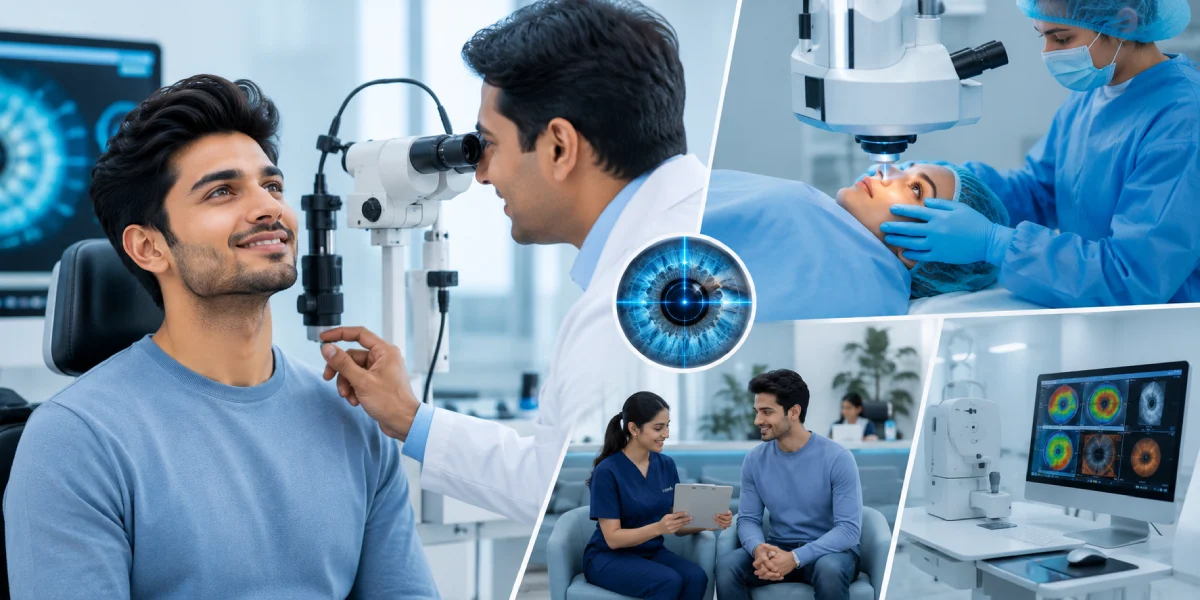
Dr. Rishi Eye Institute uses state-of-the-art laser technology along with personalized care for each patient. We provide a thorough assessment before LASIK surgery and discuss all possible options and expectations. Afterward, we ensure continuous follow-ups for all patients at each phase of healing.
We have provided laser vision correction treatments to patients from Karnal, Kurukshetra, Panipat, and Haryana. For a broader picture of the complete range of eye care we offer, our guide on complete eye care at Dr. Rishi Eye Institute explains every service available under one roof.
If you are tired of glasses and ready to find out whether LASIK is right for you — the first step is simply a consultation.
📞 Call us: +91-7015680440 📍 1363/64, Sector-6, Karnal, Haryana – 132001

1 Comment
LASIK Surgery Karnal Haryana | Dr. Rishi Eye Institute
[…] breakdown of the procedure, recovery, and what to expect at each stage, our detailed guide on LASIK surgery — a complete guide to freedom from glasses covers everything in […]