
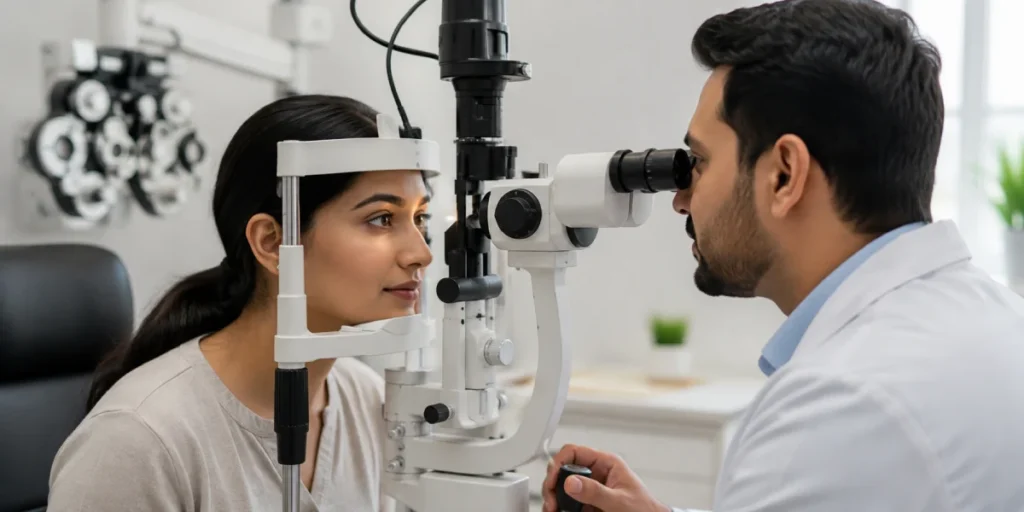
How Often Should You Get a Comprehensive Eye Checkup?
Most people visit a dentist regularly. They get blood tests done when their doctor recommends it. They schedule annual health check-ups without thinking twice. But when it comes to their eyes — the organs they rely on more continuously than almost any other — they wait until something goes wrong.
I see this pattern constantly at Dr. Rishi Eye Institute. A patient comes in because their vision has become noticeably blurred, or because they are struggling to read, or because someone at work mentioned their eyes looked red. And on examination, we find a condition that has been quietly developing for months or years — one that could have been caught and managed far more easily if they had simply come in for a routine check earlier.
The question I want to answer in this guide is a simple one: how often should you actually be getting a comprehensive eye examination? And the answer — as you will see — depends on who you are, how old you are, and what risk factors you carry.
What Is a Comprehensive Eye Examination?
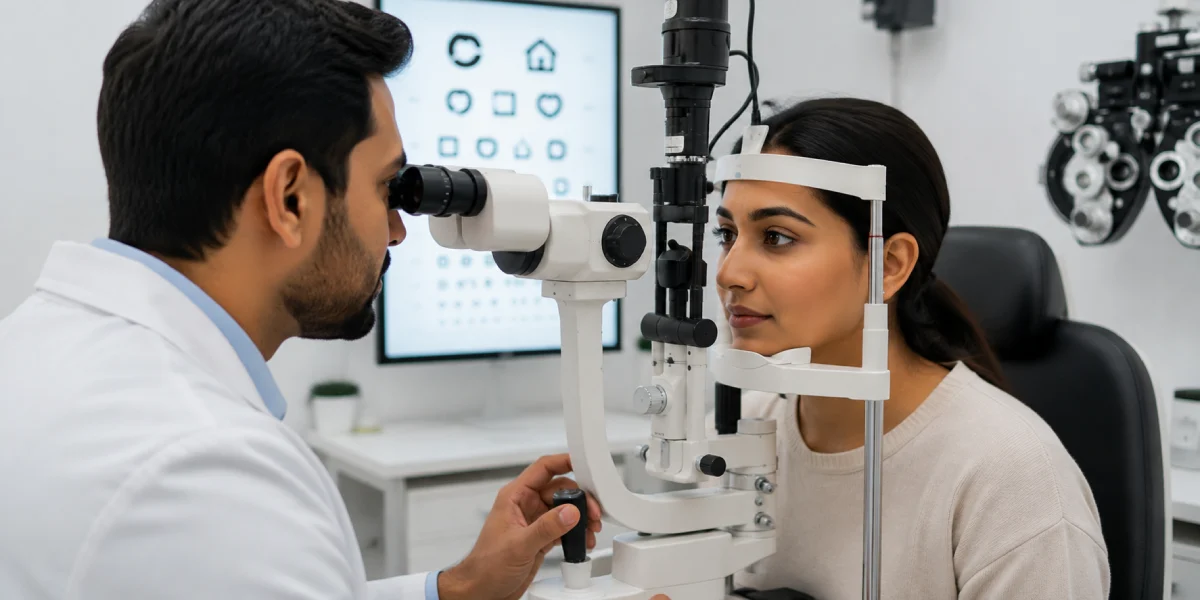
Before talking about frequency, it is worth being clear about what a comprehensive eye check actually involves — because many people confuse it with a simple vision test or a refraction check.
A refraction test tells you whether you need glasses and what your prescription should be. It is a useful starting point, but it tells you very little about the health of your eyes.
A comprehensive eye examination is something different. It includes a full assessment of your visual acuity, a slit-lamp examination of the front of the eye, measurement of intraocular pressure to screen for glaucoma, a dilated retinal examination to look at the optic nerve, macula, and peripheral retina, and assessment for conditions like cataract, dry eye, and corneal disease.
It is this complete picture — not just “can you read the chart” — that protects your long-term vision. And it is what we provide at every comprehensive check-up at Dr. Rishi Eye Institute in Karnal.
Eye Check-up Frequency by Age Group
Children — From Age 3 Onwards
Many parents assume their child’s vision is fine because the child has not complained. But children rarely complain about blurred vision — they simply assume that what they see is what everyone sees. They do not know what “normal” looks like.
Vision problems in children — including amblyopia (lazy eye), squint, and refractive errors — are far easier to treat when caught early. The visual system is still developing through the first decade of life, and delays in detection directly affect outcomes.
Recommended frequency:
- First check at age 3
- Before starting school — around age 5
- Every one to two years through school age if no issues found
- Immediately if parents notice any squinting, head tilting, eye rubbing, or difficulty seeing the board at school
Kids eye checkup in Karnal at Dr. Rishi Eye Institute is available for children of all ages — even infants if there is a concern. Our guide on squint treatment for children and early care explains why timing matters so much for childhood eye conditions.
Young Adults — 18 to 40 Years
In the absence of symptoms or risk factors, healthy young adults without glasses or contact lenses can generally have an eye examination every two years. Those who wear corrective lenses should have annual checks to ensure their prescription remains current and that their eyes remain healthy.
Risk factors that increase frequency:
- Family history of glaucoma — start screening earlier and more regularly
- Diabetes — annual retinal examination from the point of diagnosis
- High myopia — more frequent monitoring for retinal complications
- Contact lens wear — annual check-up minimum
Adults — 40 to 60 Years
The forties are when many eye conditions begin to emerge — or begin to progress silently. Presbyopia becomes noticeable. Intraocular pressure may begin to rise. Early lens changes can begin. The risk of glaucoma increases significantly.
Recommended frequency:
- Every one to two years from age 40
- Annually if you have diabetes, high blood pressure, a family history of glaucoma, or other risk factors
This is the age group where regular eye check-ups in Karnal matter most — because the conditions that can be caught in this decade are precisely the ones that cause the most damage if they are not caught until the 50s or 60s. Our guide on protecting vision after 50 explains the most common conditions that emerge in this period and why early detection changes outcomes.
Adults — Above 60 Years
After 60, the frequency of comprehensive eye examinations should increase. Cataract progression accelerates. Glaucoma risk rises further. Age-related macular degeneration becomes more common. Diabetic retinopathy can progress rapidly in poorly controlled diabetics.
Recommended frequency:
- Every year — without exception
- Every six months if you have a known eye condition being monitored
- Immediately if you notice any sudden change in vision, new floaters or flashes, or sudden loss of vision in any part of your visual field
Special Situations That Require More Frequent Monitoring
Diabetic Patients
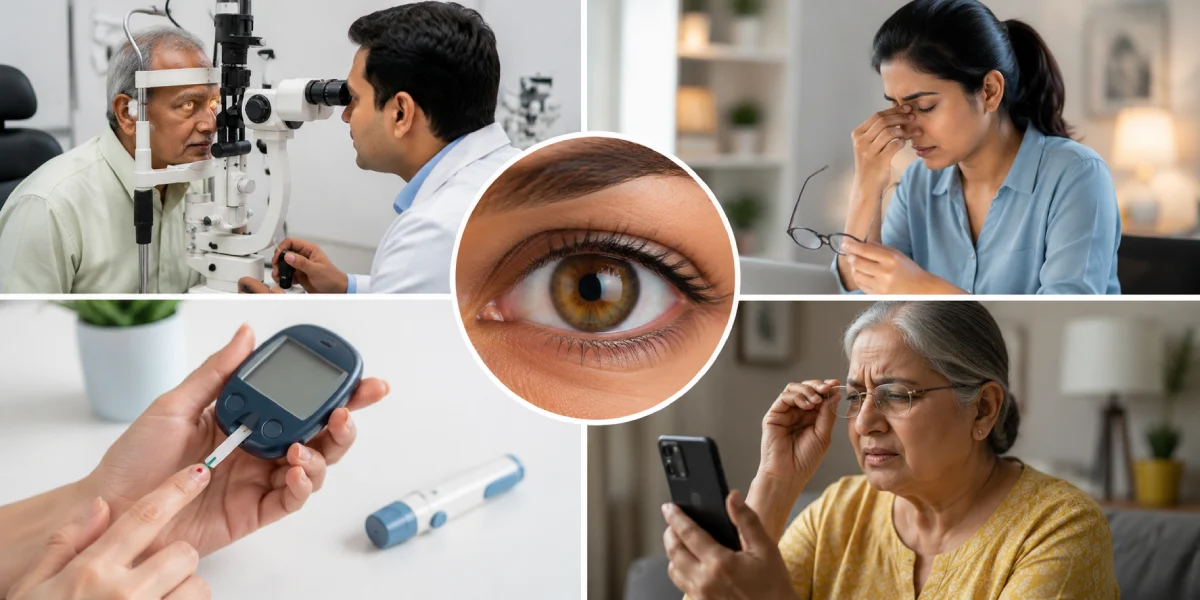
If you have diabetes — Type 1 or Type 2 — you should have a dilated retinal examination every year from the point of diagnosis, regardless of whether you have any visual symptoms. Diabetic retinopathy can be advanced before you notice any change in your vision. By the time symptoms appear, significant damage may already have occurred.
Patients With Glaucoma or Glaucoma Risk
Glaucoma is the silent thief of sight — it causes no pain and no noticeable symptoms until significant peripheral vision has been lost. If you have raised intraocular pressure, a family history of glaucoma, or have already been diagnosed with glaucoma, your follow-up schedule will be determined by your ophthalmologist — typically every three to six months.
Patients With High Myopia
High myopia — typically above minus six dioptres — significantly increases the lifetime risk of retinal detachment, glaucoma, and macular degeneration. If you are highly myopic, annual comprehensive examinations — including a dilated retinal check — are important regardless of your age.
Patients After Eye Surgery
If you have had cataract surgery, LASIK, retinal surgery, or any other ocular procedure, your follow-up schedule will be tailored by your surgeon. Regular monitoring after surgery is part of responsible post-operative care — not an optional extra.
Warning Signs That Mean You Should Not Wait
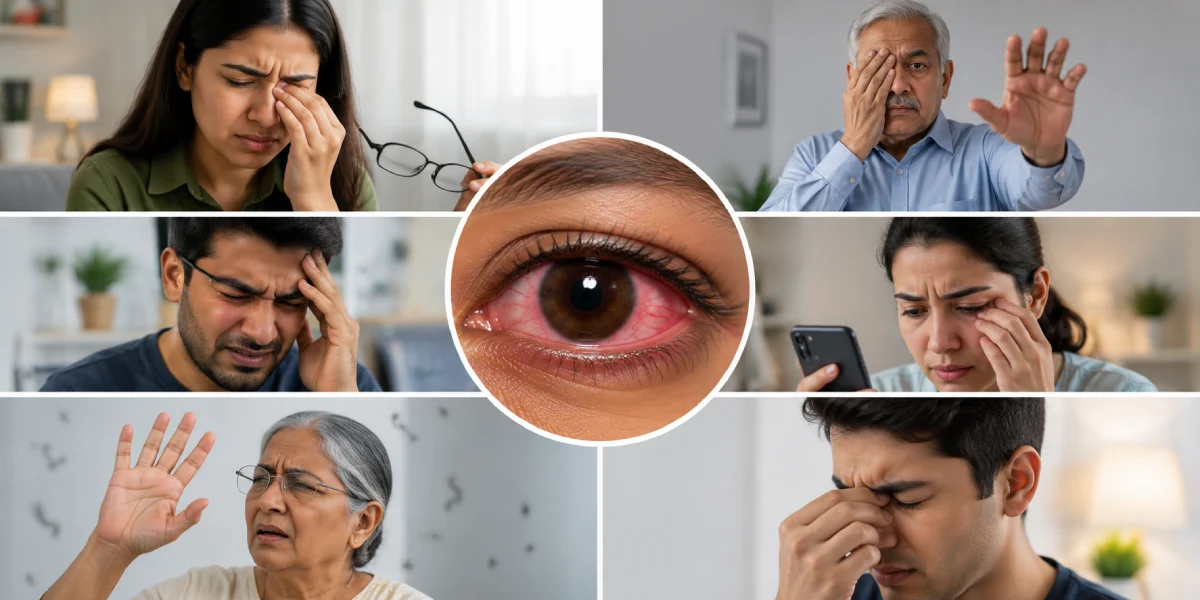
Regardless of when your last check-up was, you should book an urgent appointment if you experience any of the following:
- Sudden loss of vision in one or both eyes
- New floaters — particularly a shower of floaters — or flashes of light
- A curtain or shadow appearing across part of your vision
- Sudden double vision
- Severe eye pain with redness and nausea
- Any eye injury
These symptoms can indicate retinal detachment, acute angle-closure glaucoma, or other conditions where hours — not days — can make the difference between preserving and losing vision. Do not wait for a scheduled appointment if you notice any of these.
The Simple Answer
If you are healthy, have no risk factors, and are between 18 and 40 — every two years is a reasonable minimum. If you are above 40, once a year. If you have diabetes, glaucoma risk, high myopia, or a family history of significant eye disease — once a year from the appropriate starting age, or as directed by your ophthalmologist.
For children, start early and do not wait for complaints.
At Dr. Rishi Eye Institute, Karnal, we provide comprehensive eye examinations for patients of all ages — from young children to older adults — across Karnal, Kurukshetra, Panipat, and Haryana. A check-up takes less than an hour. The conditions it can catch early — glaucoma, diabetic retinopathy, cataract, retinal disease — are the ones that most commonly rob people of their vision unnecessarily.
For a complete overview of the eye conditions we screen for and treat, our guide on why Dr. Rishi Eye Institute is Haryana’s most trusted eye hospital covers everything available under one roof.
Your eyes work for you every moment of every day. Give them the attention they deserve.
📞 Call us: +91-7015680440 📍219, Sector-6, Karnal, Haryana – 132001

2 Comments
Squint Treatment in Karnal | Dr. Rishi Eye Institute
[…] are genuinely more difficult and frustrating for them. You should also ensure your child has a comprehensive eye checkup done regularly to catch any developing vision issues […]
Glaucoma Treatment in Karnal: Laser vs Surgery Explained
[…] pressure, or have been told you have high eye pressure — please do not wait for symptoms. Get a comprehensive eye checkup done regularly — because glaucoma caught early is glaucoma that can be […]