

Glaucoma Treatment in Karnal: Laser vs Surgery Explained
When a patient sits across from me and hears the word “glaucoma” for the first time, I can see the concern on their face. It is one of those diagnoses that feels heavy — and understandably so. Glaucoma is one of the leading causes of permanent blindness worldwide. But here is what I tell every patient in that moment: you can protect the vision you have today —if you act early and choose the right treatment.
One of the most common questions I hear after diagnosis is: “Doctor, do I need laser or surgery?” It is a fair and important question. And the honest answer is — it depends on your specific situation. In this blog, I’ll walk you through both options clearly, so you understand what each involves, who it is suited for, and how to make an informed decision with your glaucoma specialist in Karnal.
First, Let Us Understand What Glaucoma Actually Is
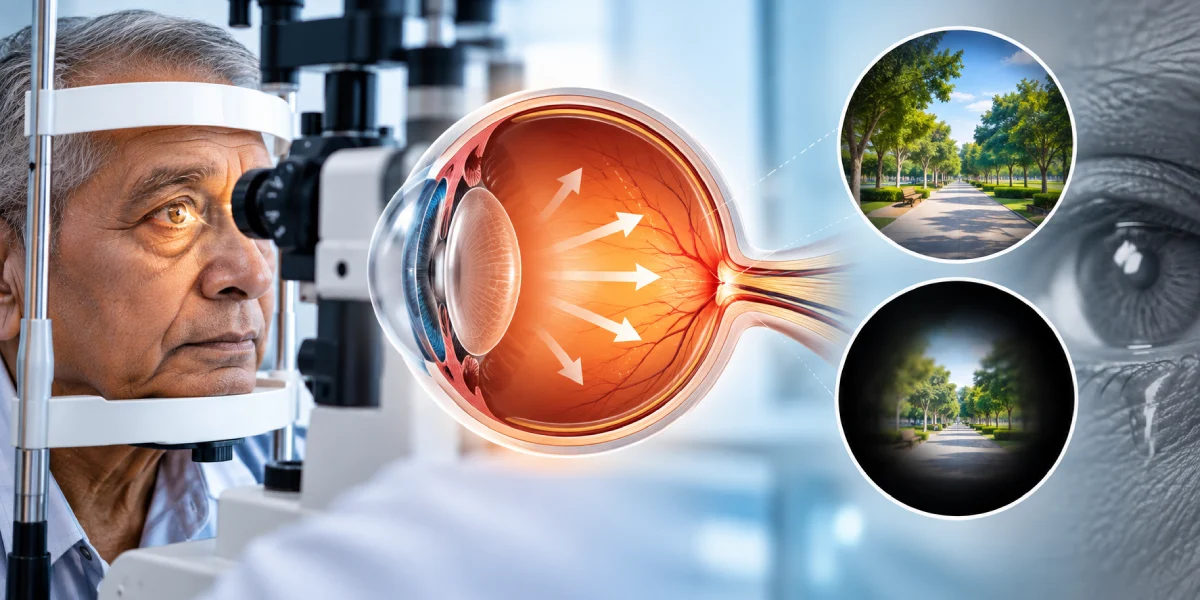
Before comparing treatments, you need to understand what we are treating — and why urgency matters so much with this particular condition.
Glaucoma is a group of eye diseases that damage the optic nerve — the vital connection between your eye and your brain. In most cases, this damage is caused by raised pressure inside the eye (intraocular pressure). What makes glaucoma particularly dangerous is that it is almost completely silent in its early stages. You will not feel the pressure building. Your central vision stays clear — until it is too late and significant peripheral vision has already been lost permanently.
This is why glaucoma is called the “Silent Thief of Sight”. And it is why treatment — whether laser or surgery — is always focused on one goal: lowering eye pressure to stop further damage. Neither treatment restores vision that has already been lost. They protect what you still have.
Glaucoma Laser Treatment: What It Is and How It Works
Laser treatment for glaucoma is typically recommended in the early to moderate stages of the disease, or when eye drops alone are not keeping the pressure controlled. There are two main types you should know about:
1. Laser Trabeculoplasty (SLT / ALT)
This is the most commonly performed laser procedure for open-angle glaucoma — the most prevalent type. The laser targets the drainage channels inside the eye, improving the outflow of fluid and thereby reducing eye pressure. The procedure is:
- Performed in the clinic — no hospital admission needed
- Completed in under 10 minutes per eye
- Painless — only numbing eye drops are required
- Effective in reducing eye pressure in most patients
- Repeatable if pressure rises again over time
SLT (Selective Laser Trabeculoplasty) is the newer, gentler version and is now preferred over the older ALT technique because it causes less thermal damage and can be safely repeated.
2. Laser Iridotomy (LPI)
This laser procedure is specifically for angle-closure glaucoma — a type where the drainage angle is physically blocked. A tiny opening is created in the iris using the laser, allowing fluid to flow freely and preventing a dangerous pressure spike. It is also used preventively in patients with narrow angles who are at high risk of an acute attack.
When Is Laser the Right Choice for You?

Your doctor may recommend laser treatment first if:
- Your glaucoma is in the early or moderate stage
- Eye drops are not controlling your pressure adequately
- You are finding it difficult to use eye drops regularly due to side effects or routine
- You have angle-closure glaucoma or narrow drainage angles
- You want to reduce your dependence on daily medication
- You are not yet ready for surgery, or your eye condition does not warrant it
Laser treatment is generally the less invasive option and is an excellent first step in managing glaucoma before considering surgery.
Glaucoma Surgery: What It Involves and When It Is Needed
When laser treatment and medications are no longer able to keep eye pressure at a safe level, or when glaucoma is detected at an advanced stage, surgery becomes the most appropriate path forward. The goal of surgery is the same as laser — reducing eye pressure — but it achieves this more powerfully and more permanently.
Trabeculectomy
This is the most established glaucoma surgery and has been performed successfully for decades. A small flap is created in the eye wall, allowing excess fluid to drain into a small reservoir (called a bleb) beneath the surface of the eye. This dramatically lowers eye pressure and is particularly effective in advanced cases.
Glaucoma Drainage Implants (Tube Surgery)
In cases where trabeculectomy is not suitable — such as patients with scarring from previous surgery or complex glaucoma — a small drainage tube is implanted in the eye to redirect fluid outflow. Tube implants have become increasingly common and have excellent long-term results.
MIGS (Minimally Invasive Glaucoma Surgery)
MIGS represents a newer generation of glaucoma procedures that offer a middle ground between laser and traditional surgery. These micro-scale procedures are less invasive, have faster recovery times, and are often performed at the same time as cataract surgery. They are well-suited for patients with mild to moderate glaucoma.
When Does Your Doctor Recommend Surgery Over Laser?
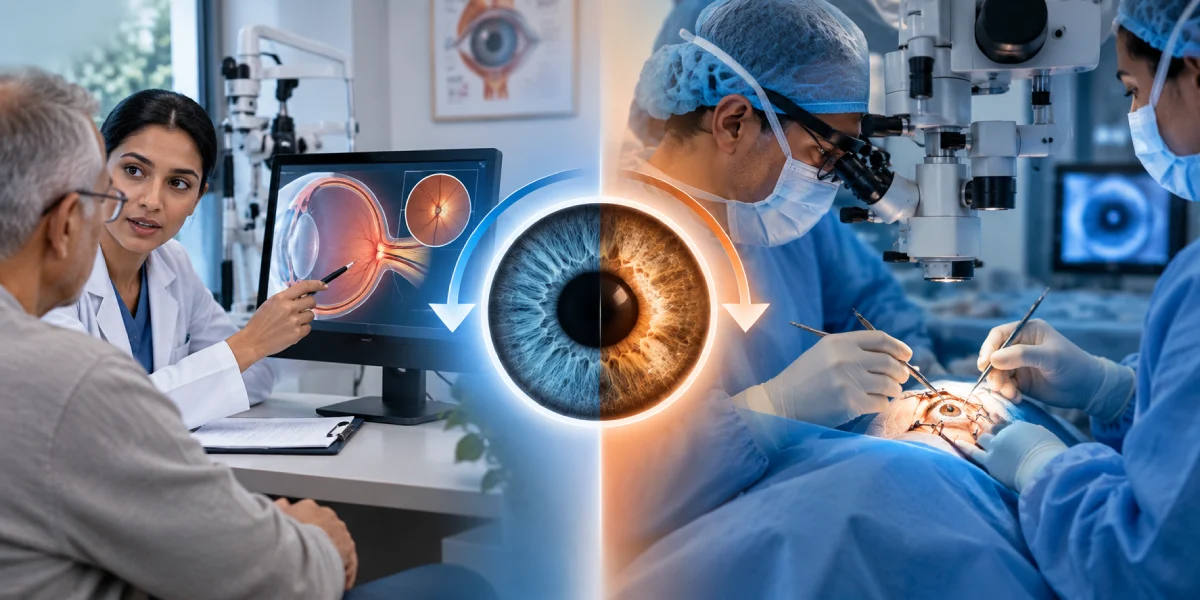
Surgery is typically the recommended path when:
- Eye pressure remains dangerously high despite medication and laser treatment
- Glaucoma is detected at an advanced stage with significant optic nerve damage
- Vision loss is progressing rapidly and needs more aggressive pressure control
- The patient has a type of glaucoma that responds better to surgery than laser
- The patient is young and needs very long-term pressure control over decades
- MIGS can be conveniently combined with a planned cataract surgery
Laser vs Surgery: A Simple Comparison
Here is a straightforward side-by-side to help you understand the key differences:
- Invasiveness: Laser — Minimal — no incision | Surgery — Moderate — small incision made
- Setting: Laser — OPD / Clinic procedure | Surgery — Operation theatre, hospital
- Recovery time: Laser — 1 to 2 days | Surgery — 2 to 4 weeks
- Pressure reduction: Laser — Moderate | Surgery — Significant and long-lasting
- Best suited for: Laser — Early to moderate glaucoma | Surgery — Advanced or uncontrolled glaucoma
- Repeatability: Laser — Can be repeated | Surgery — Usually a one-time procedure
- Anaesthesia: Laser — Eye drops only | Surgery — Local or general anaesthesia
What Happens If Glaucoma Is Left Untreated?
I want to be direct with you about this, because I think it is important.
Untreated glaucoma does not stabilise on its own. The optic nerve damage continues. The peripheral vision loss spreads inward. And eventually, it reaches your central vision — the vision you use to read, recognise faces, and drive. By that point, it is too late to recover what has been lost.
Regular eye check-ups are your most powerful defence. If you are above 40, have a family history of glaucoma, have diabetes or high blood pressure, or have been told you have high eye pressure — please do not wait for symptoms. Get a comprehensive eye checkup done regularly — because glaucoma caught early is glaucoma that can be managed.
So Which One Is Right for You?
The honest answer is: I cannot tell you without examining your eyes. No one can — and anyone who claims otherwise is oversimplifying a nuanced medical decision.
What I can tell you is that the decision between glaucoma laser treatment in Karnal and surgery is made based on:
- The type of glaucoma you have
- Your current eye pressure and target pressure
- How much optic nerve damage has already occurred
- Whether previous treatments have worked
- Your age, overall health, and lifestyle
- Your personal preferences and comfort with each option
At Dr Rishi Eye Institute, every glaucoma patient receives a thorough evaluation before any treatment recommendation is made. We believe in explaining your options honestly, answering your questions fully, and making sure you feel confident about the path forward — not pressured into it.
Protect the Vision You Have — Starting Today

Glaucoma cannot be cured — but it can absolutely be controlled. Whether laser treatment or surgery is the right approach for you, the most important step is the same: do not delay getting a proper diagnosis and starting treatment.
The vision you protect today is the vision you keep for the rest of your life. Book your glaucoma evaluation at Dr Rishi Eye Institute, Karnal — and let us help you protect what matters most.
