
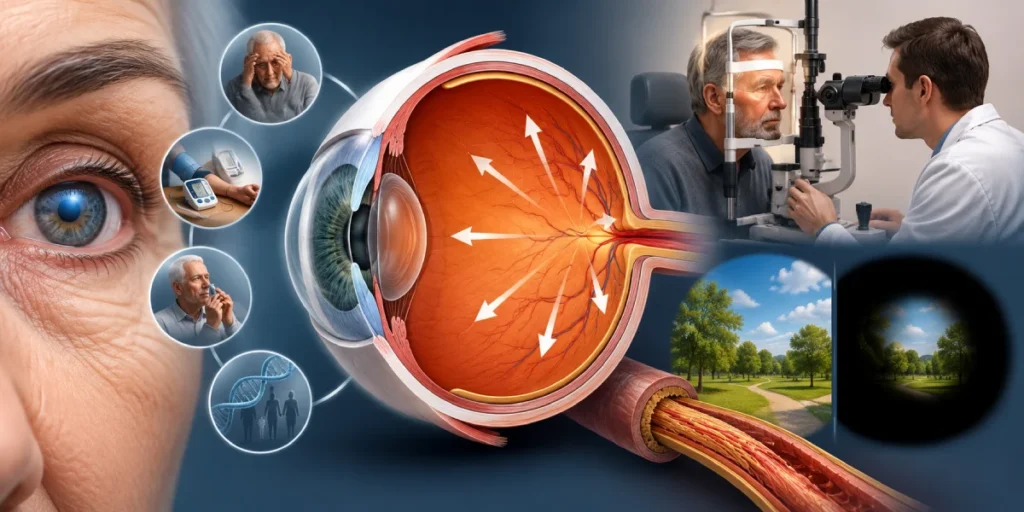
Glaucoma: Causes, Symptoms, and Treatment Guide
Glaucoma does not warn you. It does not hurt. It does not cause redness or tears. It simply takes your vision — slowly, silently, and permanently — until one day you realise the edges of your world have quietly disappeared.
This is why we call it the silent thief of sight.
At Dr Rishi Eye Institute, I have seen patients come in for a routine check-up and leave with a glaucoma diagnosis they never expected. Most of them had no symptoms at all. And that is exactly the problem.
What Is Glaucoma?
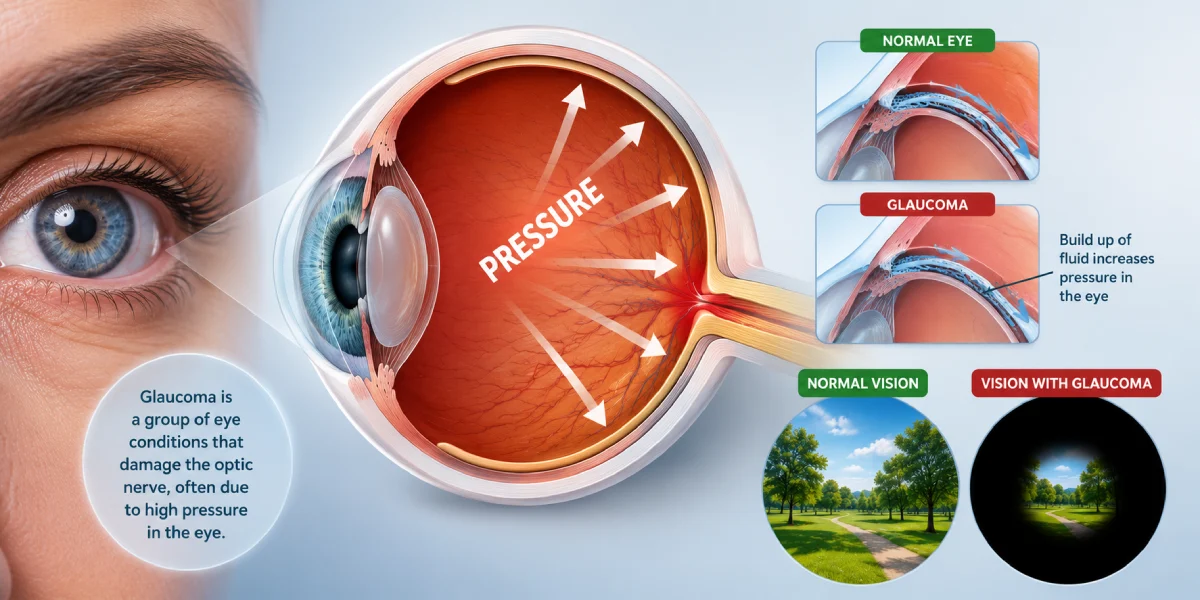
Glaucoma is a group of eye diseases that damage the optic nerve — the nerve that carries everything you see from your eye to your brain. Once this nerve is damaged, it cannot be repaired.
In most cases, the damage is caused by increased pressure inside the eye. Fluid builds up, pressure rises, and over time, the optic nerve begins to deteriorate. But glaucoma can also develop when eye pressure is completely normal — which is why pressure measurement alone is never enough for a proper diagnosis.
As explained by the Mayo Clinic, glaucoma is one of the leading causes of blindness for people over the age of 60, and the damage it causes is irreversible once it occurs.
Types of Glaucoma
Open-Angle Glaucoma is the most common form. The drainage channels in the eye gradually become clogged, pressure rises slowly, and peripheral vision begins to fade. There is no pain. No obvious sign. Most people notice nothing until significant damage has already occurred.
Angle-Closure Glaucoma is a medical emergency. Pressure rises suddenly and severely. Symptoms include intense eye pain, blurred vision, headache, nausea, and halos around lights. If this happens, go to an eye hospital immediately. Do not wait.
Normal-Tension Glaucoma is less understood but equally serious. The optic nerve gets damaged even when eye pressure readings appear normal. Reduced blood flow to the nerve is believed to be a contributing factor.
Congenital Glaucoma affects newborns and young children due to abnormal eye development. Signs include excessive tearing, light sensitivity, and cloudiness in the cornea.
Secondary Glaucoma develops as a result of another condition — diabetes, eye injury, prolonged steroid use, or eye inflammation.
Symptoms: The Ones You May Never Notice
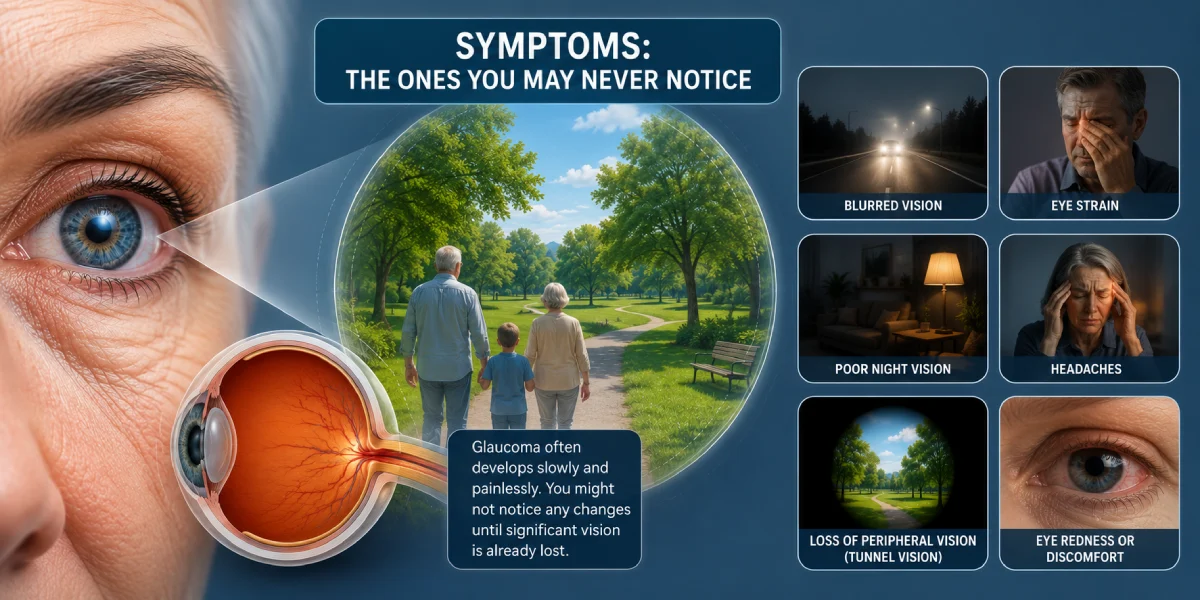
This is the hardest part about glaucoma. In the early stages, there are often no symptoms at all.
As the disease progresses, you may experience:
- Gradual loss of side or peripheral vision
- Blurred or hazy vision
- Difficulty seeing in low light
- Tunnel vision in advanced stages
- Eye pain or redness — mainly in angle-closure glaucoma
- Halos around lights
According to Healthline, most people with open-angle glaucoma do not experience any symptoms until they have already lost a significant portion of their vision. This is precisely why routine screening is so critical — symptoms alone cannot be relied upon.
Who Is at Risk?
You have a higher risk of glaucoma if you:
- Are above 40 years of age
- Have a family history of glaucoma
- Have diabetes or high blood pressure
- Have been using steroid medications for a long period
- Have had a previous eye injury
- Have naturally elevated eye pressure
If any of these apply to you, regular eye screening is not optional — it is necessary.
How Is Glaucoma Diagnosed?
A proper glaucoma evaluation includes several tests:
- Tonometry — measures eye pressure
- Optic nerve examination — checks for signs of nerve damage
- Visual field test — maps any loss in peripheral vision
- Corneal thickness measurement affects the accuracy of pressure readings
- OCT scan — detailed imaging of the optic nerve and retinal nerve fibres
No single test is sufficient. All of these together give us the complete picture needed to diagnose and monitor glaucoma accurately.
Treatment Options
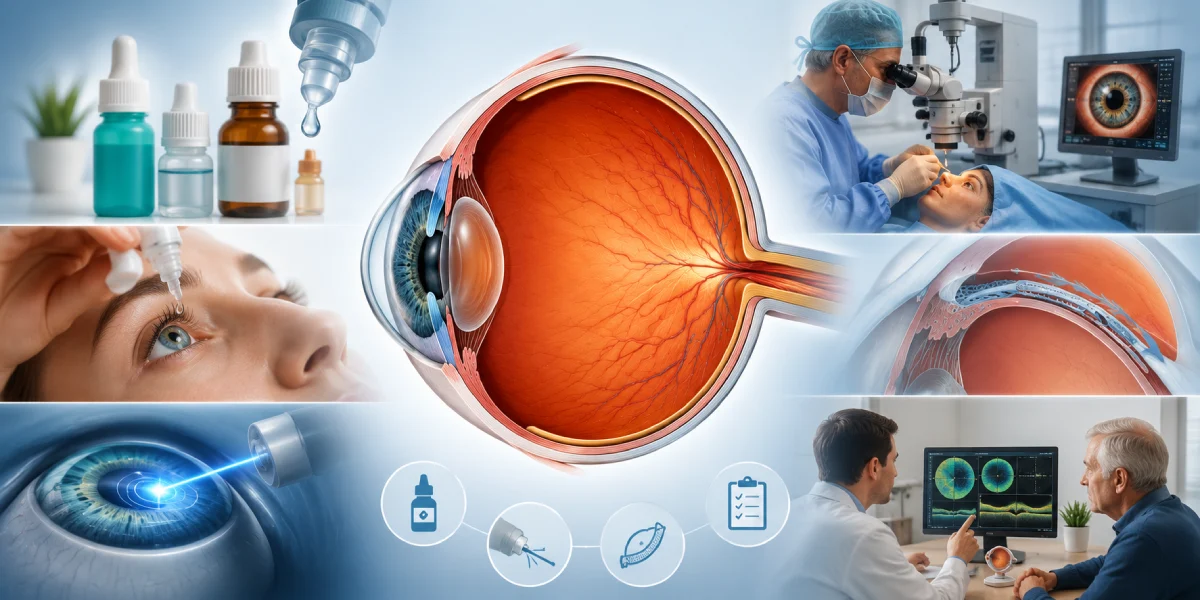
Glaucoma cannot restore lost vision — but treatment can stop it from getting worse. The focus is on lowering eye pressure and protecting the remaining optic nerve.
Eye Drops are the most common first step. They either reduce fluid production inside the eye or improve its drainage. The Glaucoma Research Foundation emphasises that consistency is the most important factor — skipping doses, even occasionally, allows pressure to rise and damage to continue.
Laser treatment, such as Selective Laser Trabeculoplasty (SLT) improves fluid drainage without incisions. It is effective for open-angle glaucoma and can reduce the need for daily eye drops in many patients.
Surgery is recommended when drops and laser treatment are not providing enough pressure control. Procedures like trabeculectomy create a new drainage pathway to reduce eye pressure more effectively and protect the optic nerve long-term.
The right treatment depends on the type of glaucoma, how advanced it is, and your overall health. Every patient’s plan is personalised accordingly.
Can You Reduce Your Risk?
Not every case of glaucoma can be prevented — genetics and anatomy play a significant role. But you can take meaningful steps to protect yourself:
- Get a comprehensive eye examination every year after age 40
- Keep diabetes and blood pressure well under control
- Never use steroid eye drops or tablets without a doctor’s prescription
- Follow your prescribed treatment plan without missing doses
- Report any sudden changes in vision immediately
The Cleveland Clinic recommends that high-risk individuals — especially those with a family history of glaucoma — begin screening before the age of 40 and continue regularly throughout life.
Final Thoughts
Glaucoma takes vision that never comes back. But when detected early and treated consistently, most patients keep their functional vision for life.
If you are above 40 — or if glaucoma runs in your family — please do not wait for symptoms. A comprehensive eye screening takes less than an hour and could protect your sight for decades.
At Dr Rishi Eye Institute, Karnal, we provide advanced glaucoma screening, accurate diagnosis, and personalised treatment for every patient. Your vision is worth protecting — and we are here to help you do exactly that.

1 Comment
Best Eye Hospital in Karnal | Dr. Rishi Eye
[…] symptoms until significant vision loss has already occurred. Early detection is key. The experienced glaucoma specialist in Karnal at Dr Rishi Eye Institute uses advanced diagnostic tools like OCT testing to detect the condition […]