
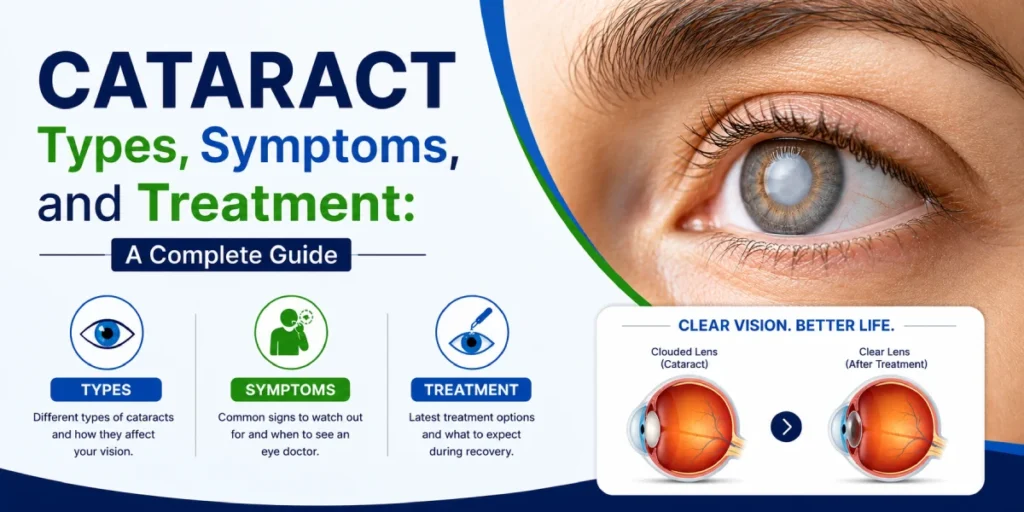
Cataract Types, Symptoms, and Treatment: A Complete Guide
Let me ask you something. When was the last time you looked out of a window and everything appeared crisp, clear, and bright? If your answer is “not recently” — and especially if you are above 50 — there is a possibility that a cataract may be quietly developing in one or both of your eyes.
I say “quietly” because that is exactly how cataracts work. They creep in slowly, without pain, without drama — until one day you realise you are squinting at the television, struggling to read a menu, or finding night driving unusually difficult.
What Exactly Is a Cataract?
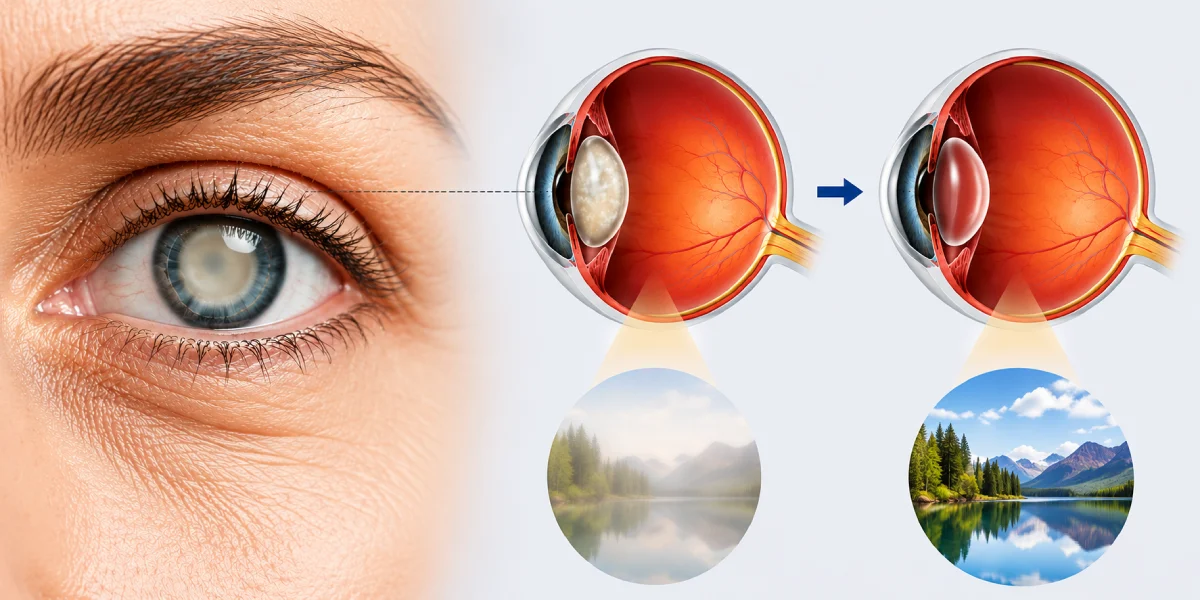
Inside your eye sits a natural lens — clear, flexible, and designed to focus light precisely onto your retina. A cataract forms when proteins in this lens begin to clump together, making the lens cloudy. The result is blurred, hazy, or dimmed vision, much like looking through a fogged-up window.
According to the World Health Organisation, cataract is the leading cause of blindness globally, responsible for approximately 51% of world blindness. Yet it remains one of the most treatable conditions in all of medicine.
The Different Types of Cataract
Not all cataracts are the same. Understanding the type helps us plan the right treatment for you.
1. Age-Related Cataract
This is by far the most common type, and it comes in three forms:
Nuclear Cataract forms in the centre of the lens and is the most typical age-related variety. In its early stages, it can actually improve your near vision temporarily — a phenomenon some patients describe as “second sight.” Do not be fooled by this. It does not last, and distance vision gradually worsens.
Cortical Cataract begins at the outer edges of the lens and grows inward like spokes of a wheel. It causes significant glare and makes night driving particularly dangerous.
Posterior Subcapsular Cataract develops at the back of the lens and tends to progress faster than the other two. Reading becomes difficult, and bright lights cause uncomfortable glare.
2. Congenital Cataract
Some children are born with cataracts or develop them in early childhood. These may be inherited or linked to infections during pregnancy. Early detection and treatment are critical to ensure the child’s vision develops normally.
3. Traumatic Cataract
An injury to the eye — whether from a blunt impact, a sharp object, or a chemical — can damage the lens and cause a cataract. This can happen immediately after the injury or develop years later.
4. Secondary Cataract
Certain health conditions and medications increase cataract risk. If you have diabetes, have been on long-term steroid medication, or have had previous eye surgery or inflammation, your risk is significantly higher. The American Diabetes Association confirms that people with diabetes are two to five times more likely to develop cataracts than those without the condition.
5. Radiation Cataract
Prolonged exposure to ultraviolet radiation or radiation therapy can lead to cataract formation over time. This is why UV-protective eyewear matters more than most people realise.
Symptoms You Should Never Ignore
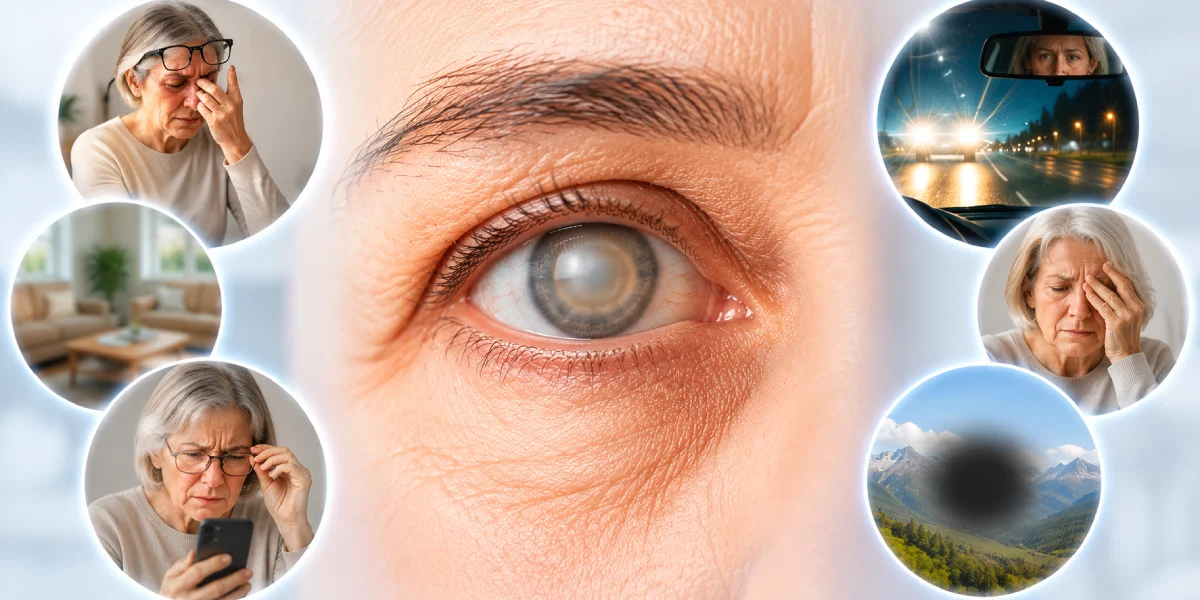
Cataracts rarely cause sudden symptoms. They tend to progress slowly, which is why many people dismiss the early signs as normal aging. Here is what to watch for:
- Vision that appears blurred, cloudy, or hazy
- Difficulty seeing clearly at night
- Increased sensitivity to light and glare
- Frequent changes in your spectacle prescription
- Colours appear faded or with a yellowish tint
- Double vision in one eye
- Halos appearing around lights
- Difficulty reading even with glasses
How Is Cataract Diagnosed?
At Dr Rishi Eye Institute, a comprehensive cataract evaluation includes vision testing, slit lamp examination, retinal assessment, eye pressure measurement, and detailed cataract grading. The entire process is painless and typically completed in a single visit.
Treatment: Can Cataracts Be Cured Without Surgery?
In the very early stages, updating your glasses prescription, using brighter lighting, or switching to anti-glare lenses can help manage mild symptoms. But I want to be honest with you — these are temporary measures. They do not remove the cataract or stop it from progressing.
Surgery is the only definitive treatment for cataract. And the good news is that modern cataract surgery is safe, quick, and highly effective.
Cataract Surgery: What to Expect
Phacoemulsification — The Gold Standard
The most commonly performed technique today is phacoemulsification, or “phaco” surgery. A small ultrasonic probe breaks up the cloudy lens, which is then gently removed through a tiny incision. An artificial intraocular lens (IOL) is placed in its position.
As noted by the American Academy of Ophthalmology, phacoemulsification has a success rate of over 95% in patients without other eye conditions — making it one of the safest surgical procedures performed today.
The procedure typically takes 15 to 20 minutes. There is minimal discomfort, no stitches in most cases, and recovery is faster than most patients expect.
Choosing the Right Lens for You
One of the most important decisions in cataract surgery is selecting the right intraocular lens. Options include:
- Monofocal lenses provide clear vision at one distance, usually far
- Multifocal lenses offer both near and distance vision, reducing dependence on glasses
- Toric lenses — correct astigmatism along with cataract
- Extended depth of field (EDOF) lenses provide a wider range of clear vision with fewer halos
The right choice depends on your lifestyle, the nature of your work, your other eye conditions, and your visual goals. We take time to discuss all of this with every patient before recommending a lens.
When Should You Actually Get the Surgery Done?
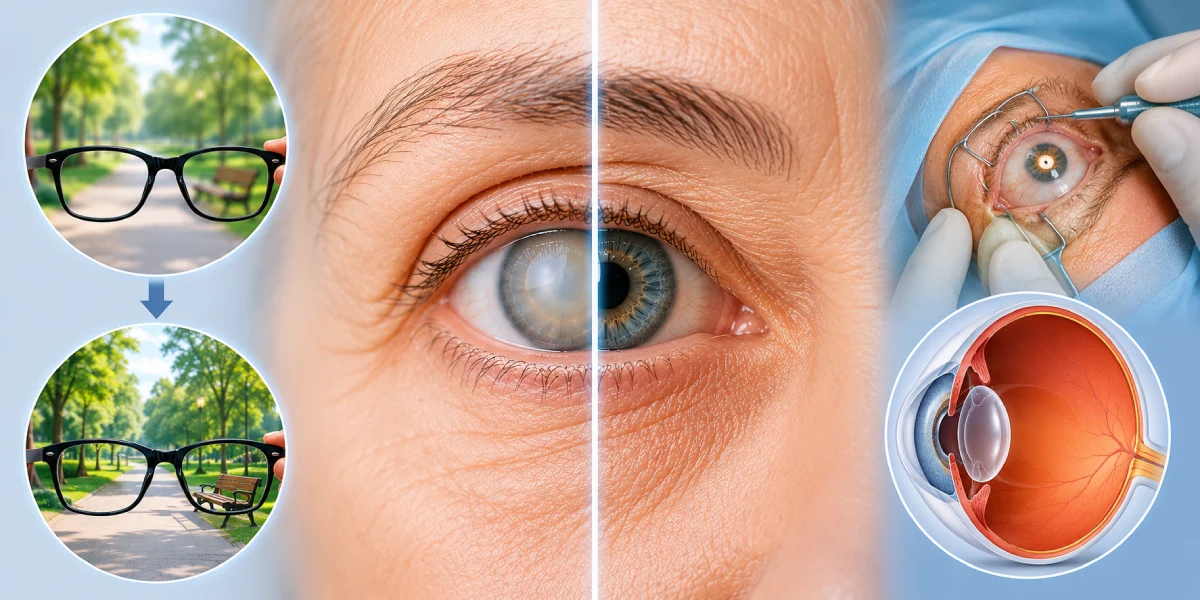
This is a question I get asked very often. The honest answer is: when the cataract starts affecting your quality of life.
You do not have to wait until you are nearly blind. If driving has become unsafe, if reading is frustrating, if you are cutting back on activities you enjoy — that is the right time to consider surgery. Delaying unnecessarily can allow the cataract to become denser, which increases the complexity of surgery and recovery time.
Reducing Your Risk — What You Can Do Today
While cataracts cannot always be prevented, certain habits significantly lower your risk:
- Keep blood sugar, blood pressure, and cholesterol well controlled
- Wear UV-protected sunglasses every time you step outside
- Quit smoking — the National Eye Institute lists smoking as a major modifiable risk factor for cataract development
- Eat a diet rich in green vegetables, citrus fruits, and omega-3-rich fish
- Schedule comprehensive eye examinations every year after the age of 50
Clear Vision Is Possible — and Closer Than You Think
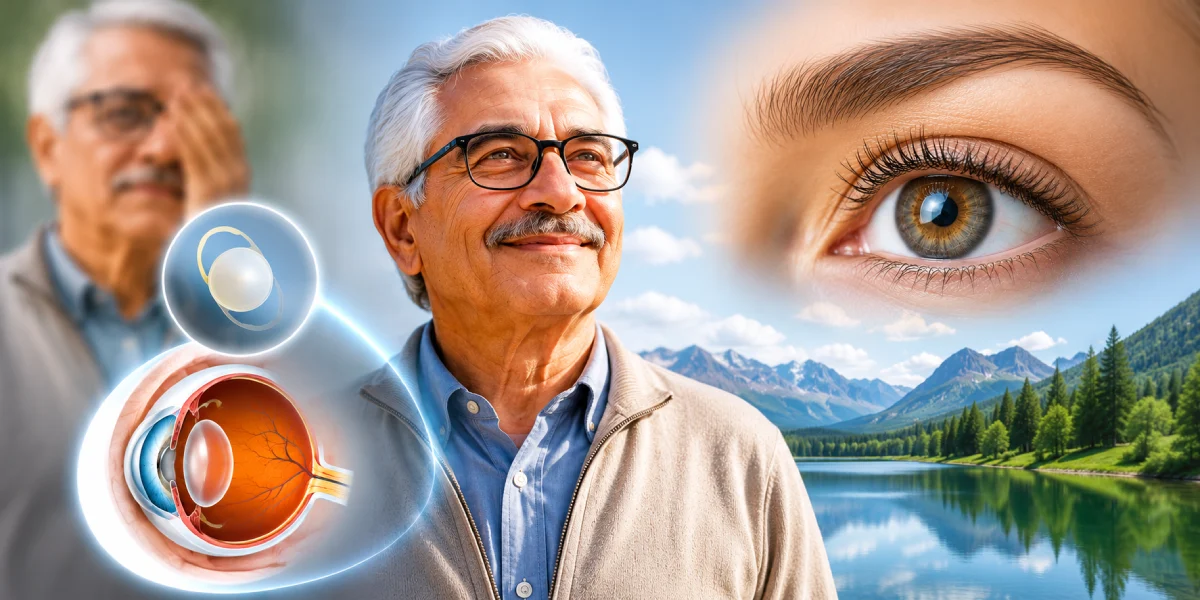
Cataracts can take away your independence, your confidence, and the simple pleasures of everyday life. But they do not have to. With the right diagnosis, the right surgeon, and the right lens, most patients achieve significantly better vision than they had even before the cataract developed.
At Dr Rishi Eye Institute, Karnal, we are committed to making that possible for every patient who walks through our doors. From your first consultation to your post-operative care, our team is with you at every step.

2 Comments
Best Eye Hospital in Karnal | Dr. Rishi Eye
[…] to restore clear vision safely and effectively. The institute also supports patients eligible for free cataract surgery in Karnal under government schemes, including Ayushman […]
Cataract Lens Guide Karnal | Dr. Rishi Eye Institute
[…] of the cataract surgery process — from diagnosis through recovery — our detailed guide on cataract types, symptoms and treatment covers everything you need to know before your […]