

ECHS & Ayushman Bharat Cashless Eye Care in Karnal
As soon as an eye issue affects your day-to-day life, it becomes essential to get proper treatment immediately. However, before seeking treatment, one of the main questions many people ask is, “What is the cost of the treatment?”
Here, schemes of government healthcare systems such as ECHS & Ayushman Bharat could prove to be quite useful for the eligible beneficiaries. However, just having a card does not guarantee that all eye care and surgeries would be covered without any expenses.
If you are looking for cashless eye care in Karnal, it is quite essential for you to know about some important things related to these schemes.
What Is ECHS and Can It Help With Eye Treatment?
The Ex-Servicemen Contributory Health Scheme (ECHS) provides healthcare support to eligible ex-servicemen pensioners and their dependants. Beneficiaries can access healthcare through ECHS facilities and empanelled hospitals, subject to the applicable scheme rules and procedures.
For planned specialist treatment, an appropriate referral may be required depending on the case and the applicable ECHS process. This implies that the holder of the ECHS card is supposed to have a clear understanding that presenting the card at any hospital does not mean cashless treatment automatically.
The first thing that you or your family member, as ECHS beneficiaries, are supposed to do before seeking any eye consultation or surgery is to ensure that the hospital from which you intend to get help is empanelled for providing such treatment.
In case you are in Karnal and in search of an ECHS eye hospital in Karnal, then Dr. Rishi Eye Institute is one of the best ECHS and Ayushman Bharat empanelled eye care institutes.
What Is Ayushman Bharat and Does It Cover Eye Treatment?
Ayushman Bharat PM-JAY is a government healthcare scheme that provides eligible beneficiaries access to cashless treatment at empanelled hospitals, subject to the scheme’s eligibility criteria and covered treatment packages.
But there is an important point that patients should understand.
An Ayushman card does not mean that every eye procedure is automatically free.
The treatment needs to fall under the applicable scheme package, and the hospital must be authorised to provide that particular treatment under the scheme. Coverage can also depend on the current rules and package guidelines.
That said, for individuals who hold an Ayushman card and are thinking about eye surgery, it is always advisable to ensure that their procedure is covered by the hospital before making any decisions.
Regarding finding an Ayushman Bharat eye hospital in Karnal, according to Dr. Rishi Eye Institute, it has been empanelled under Ayushman Bharat.
Which Eye Treatments May Be Covered?
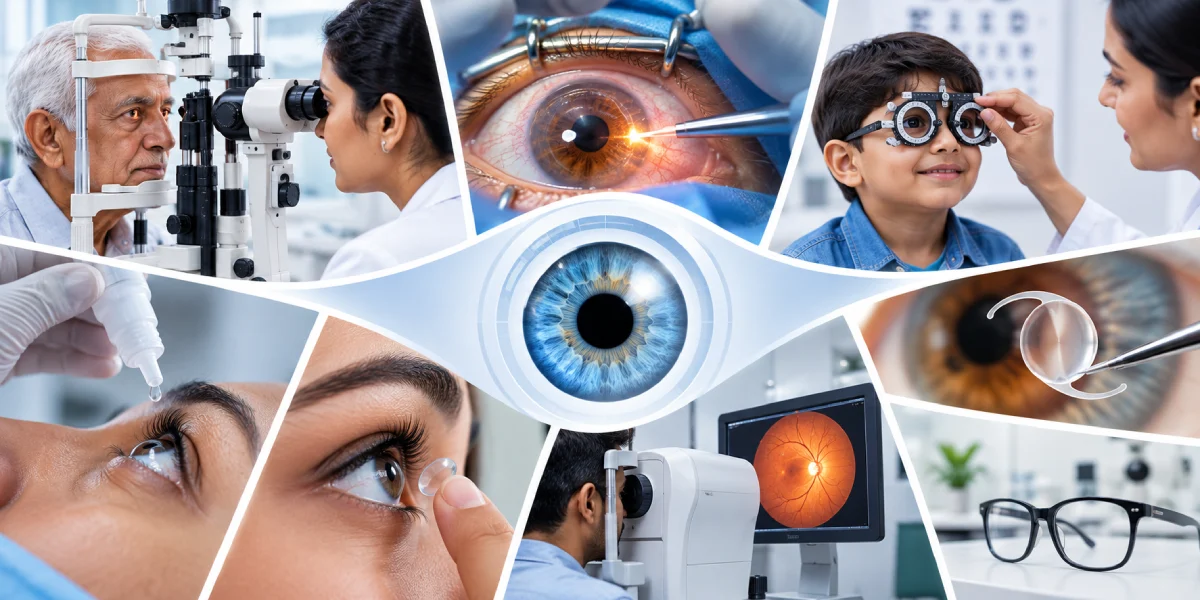
Eye care is not limited to one particular procedure. A patient may visit an ophthalmologist for cataract, glaucoma, retinal problems, corneal conditions, squint, or several other issues.
Dr. Rishi Eye Institute offers a range of ophthalmic services, including cataract surgery, glaucoma treatment, LASIK, diabetic retinopathy care, cornea care, squint treatment, and other eye-care services.
For example, cataract is one of the most common reasons people require eye surgery. If you are looking for cataract surgery in Karnal and you have an ECHS or Ayushman card, it is important to ask whether your particular treatment qualifies under the applicable scheme.
Similarly, glaucoma requires proper diagnosis and treatment planning. You can learn more about the condition and available treatment options through the hospital’s glaucoma treatment in Karnal page.
The important thing is not to choose a treatment based only on the card you have. Your eye condition should first be properly evaluated by an ophthalmologist.
ECHS vs Ayushman Bharat: What Should You Check?
Although both schemes can help eligible patients access healthcare, the process and eligibility requirements are different.
If you are using ECHS, you should check:
- Whether you are an eligible ECHS beneficiary
- Whether the hospital is empanelled
- Whether a referral is required for your treatment
- Whether your particular eye procedure is covered
- Which documents you need to carry
If you are using Ayushman Bharat, you should check:
- Whether your family is eligible under the scheme
- Whether your Ayushman card or beneficiary details are active
- Whether the hospital is empanelled
- Whether the required eye treatment is included under an applicable package
- Which identification and documents are required
These checks may take only a little time, but they can prevent confusion later.
What Documents Should You Carry for Eye Treatment?
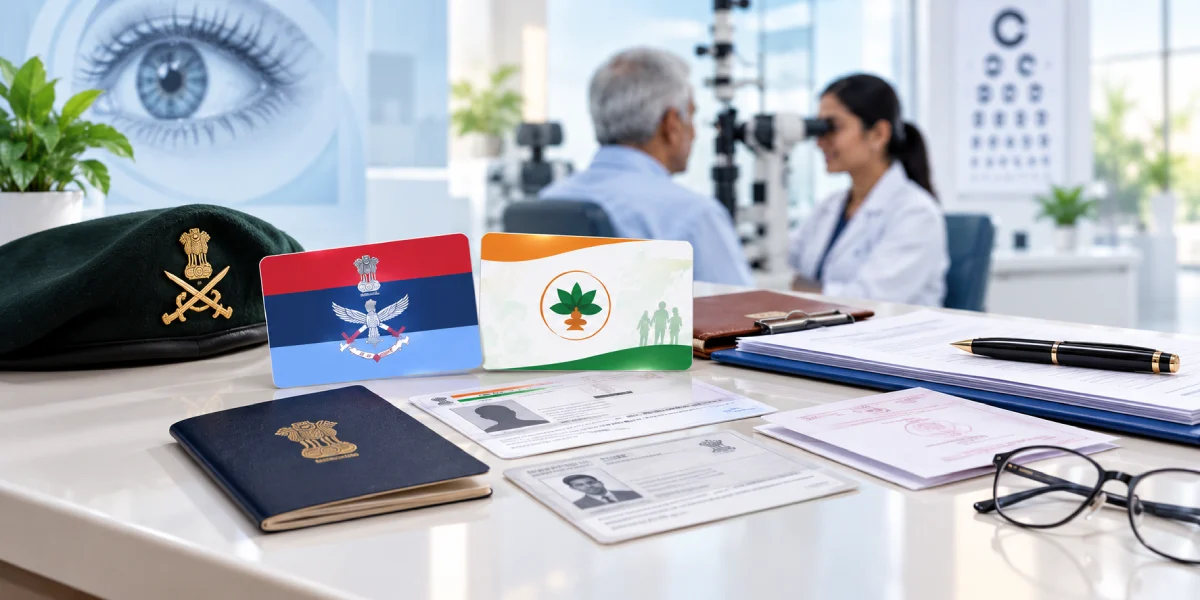
If you are planning an appointment under ECHS or Ayushman Bharat, keeping your documents organised can make the process easier.
Depending on the scheme and your individual case, you may need:
- ECHS card, if applicable
- Ayushman Bharat card or beneficiary identification
- Valid identity proof
- ECHS referral documents, where required
- Previous eye reports
- Prescriptions and medical records
- Any previous surgery or treatment documents
The exact documents can vary depending on the scheme and treatment. Therefore, it is always a good idea to confirm the requirements before visiting the hospital.
Why Choose Dr. Rishi Eye Institute for Government Scheme Eye Care?
For someone searching for cashless eye care in Karnal, choosing an empanelled hospital is an important first step.
Dr. Rishi Eye Institute provides comprehensive eye care in Sector 6, Karnal. The institute’s website states that it has more than 10 years of experience and that over 3 lakh patients have been treated. It also provides services for cataract, glaucoma, LASIK, diabetic retinopathy, cornea, squint, and other eye conditions.
The hospital’s approach is not limited to surgery. Proper diagnosis and evaluation are equally important because two patients with similar symptoms may require completely different treatment plans.
If you want to understand the different services available, you can visit the eye care services at Dr. Rishi Eye Institute before booking your appointment.
Is Cashless Eye Treatment Completely Free?
This is one of the most important questions patients ask.
The answer depends on the scheme, beneficiary eligibility, treatment package, and applicable guidelines.
Therefore, it would be incorrect to assume that every eye examination, medicine, lens option, procedure, or surgery is automatically free simply because a person has an ECHS or Ayushman card.
Before treatment, patients should confirm exactly what is covered and whether there are any conditions or exclusions applicable to their case.
This is especially important when discussing different treatment options or surgical procedures.
Don’t Delay an Eye Check-Up Because of Cost Concerns
I have seen how easily people postpone an eye check-up when they are worried about treatment expenses. Sometimes they wait until blurred vision becomes difficult to manage or everyday activities become uncomfortable.
But eye problems should not always be left until they become severe.
Conditions such as glaucoma and diabetic retinopathy may progress without obvious symptoms in the early stages. Regular eye examinations can help identify problems earlier and allow the ophthalmologist to recommend appropriate treatment.
Final Thoughts: Are You Eligible for Cashless Eye Care?
ECHS and Ayushman Bharat can make quality healthcare more accessible for eligible beneficiaries, but cashless treatment is subject to the rules of the respective scheme and the treatment covered under it.
If you are an ECHS beneficiary, make sure you understand the referral and empanelment requirements. If you have an Ayushman card, confirm your eligibility and whether the required eye procedure is covered under the applicable package.
You can contact Dr. Rishi Eye Institute to enquire about your eye-care needs and the applicable process.
Clear vision should never be ignored. If you have an eye problem, get it checked in time and understand your treatment options before making a decision.
