
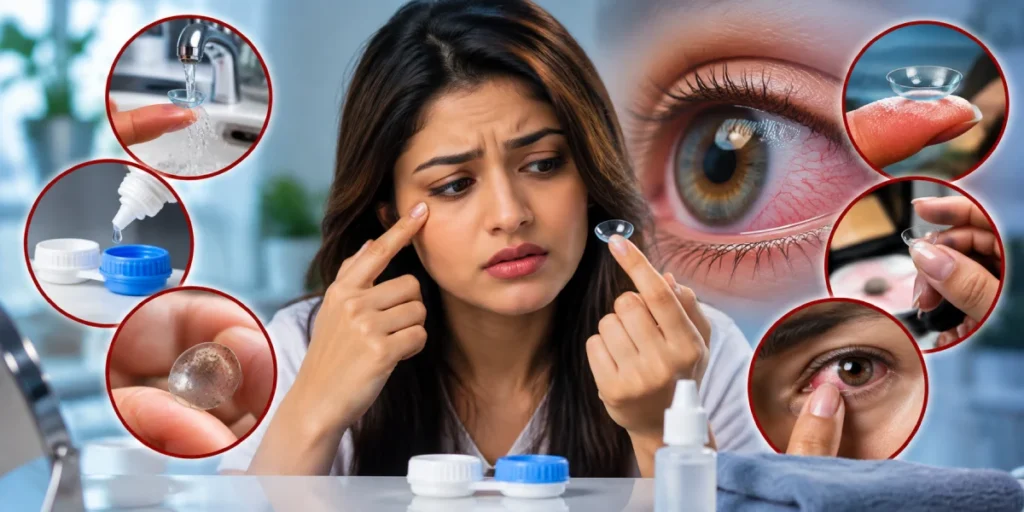
Contact Lens Hygiene Mistakes That Can Harm Your Eyes
Contact lenses are wonderfully convenient. You wake up, put them in, and the world is sharp again, with no frames sliding down your nose and no fogging up when you walk into a warm room. But I have to be honest with you: a contact lens is a medical device that sits directly on your cornea, the clear front surface of your eye. It needs proper care, just like anything else that touches a sensitive part of your body.
Most serious lens-related eye problems don’t come from bad luck. They come from small daily habits that feel harmless. In this guide, I’ll walk you through the most common contact lens hygiene mistakes, explain why they matter, and show you what to do instead.
Why Contact Lens Hygiene Matters So Much

Your cornea has no blood vessels. It gets its oxygen straight from the air and from your tears. A lens that is dirty, old, or worn too long reduces that oxygen supply and traps germs against the eye. The result can be anything from mild irritation to keratitis, an infection of the cornea that, in serious cases, can leave a permanent scar and affect your vision.
The good news is that most of these risks are preventable. Let’s look at where people usually go wrong.
1. Sleeping in Your Lenses
I’d put this mistake at the very top. Closed eyelids already reduce oxygen to the cornea, and a lens reduces it even more. Low oxygen weakens the surface of the eye and makes it easier for bacteria to take hold.
Even a short nap with lenses in can leave your eyes red and dry. Unless your eye doctor has specifically prescribed extended-wear lenses, take your lenses out before you sleep, every single night.
2. Skipping Hand Washing
Your fingers touch phones, door handles, keyboards, and currency notes all day long. If you handle your lenses without washing your hands first, all of that goes straight onto your eye.
Wash your hands with plain soap and water, and dry them with a clean, lint-free towel. Moisturizing or heavily scented soaps can leave a film on your fingers, so plain soap is the safer choice.
3. Rinsing or Storing Lenses in Water

Tap water, bottled water, pool water, and saliva are not safe for contact lenses. Water can carry a microorganism called Acanthamoeba, which can cause a painful and stubborn corneal infection that is difficult to treat.
Always use fresh lens solution recommended by your eye doctor. Never swim, shower, or use a hot tub while wearing lenses, however tempting it may be.
4. Topping Off Old Solution
Many people just add a little fresh solution to the old liquid in the case. I understand why, since it feels like you’re saving solution. But old solution has already lost its disinfecting power and may contain germs from the day before.
Empty the case completely, rinse it with fresh solution, let it air dry face down, and then fill it with new solution every time. Also check the expiry date on the bottle, because expired solution doesn’t disinfect properly.
5. Ignoring Your Lens Case
A lens case can quietly become a home for bacteria, especially if it is rarely cleaned. Replace your case at least every three months, or sooner if it looks cracked or dirty. Never rinse it with tap water and then close it while wet.
6. Wearing Lenses Longer Than Recommended
A monthly lens is meant for one month, and a daily lens is meant for one day. Stretching them “just a few more days” lets protein and oil deposits build up on the surface, which cuts oxygen flow and raises the risk of irritation.
If you use daily disposables, throw them away after one use and never store them to reuse. Also watch how many hours you wear them each day. If your eyes feel tired by evening, switch to your glasses instead of pushing through.
7. Wearing Lenses With a Red or Painful Eye

If your eyes are red, watery, painful, or unusually sensitive to light, your body is sending you a warning. Putting a lens over an irritated eye can turn a small problem into a big one.
Take the lenses out and give your eyes a rest. If symptoms don’t settle quickly, get them checked. Waiting it out is how a minor infection can turn into a corneal ulcer. If you’re not sure what’s behind the redness, our guide on why your eyes turn red and how it is treated can help you understand the common causes.
8. Putting Makeup on Before Lenses
Powder, mascara flakes, and oily creams can stick to a lens and irritate your eye. Put your lenses in first and apply makeup afterward. At night, take your lenses out before removing makeup. Also avoid waterproof eyeliner on the inner rim of the eyelid, since it can get trapped under the lens.
9. Sharing Lenses or Buying Without a Prescription
Lenses are not one-size-fits-all. Curvature, diameter, and material all need to suit your eye. Sharing lenses, or buying colored and decorative lenses without an eye exam, can cause poor fit, scratches, and infections. Every pair should come with a proper prescription.
10. Wearing Lenses in Dusty, Smoky, or Dry Places
Long bike rides, construction dust, smoke, and air-conditioned rooms can all dry out your lenses and irritate your eyes. If you spend long hours in such conditions, take breaks and blink often. And if you work on screens all day, remember that we blink far less while staring at a display, which makes lens discomfort worse. Our article on digital eye strain and simple ways to prevent it has practical tips.
11. Not Keeping a Pair of Glasses as Backup
This one is easy to forget. If your eyes are irritated, you need a comfortable alternative, and glasses are exactly that. Without a backup pair, many people keep wearing lenses through discomfort, which is when trouble starts. Keep an updated pair of glasses ready at home.
12. Skipping Regular Eye Check-Ups
Your prescription can change, and your eyes can develop dryness or mild damage without obvious symptoms. If you wear contact lenses, I recommend a comprehensive eye exam at least once a year. Not sure how often is right for you? Read how often you should get a comprehensive eye checkup.
Warning Signs You Should Never Ignore

Remove your lenses and see an eye specialist promptly if you notice:
- Persistent redness or eye pain
- Blurred vision that doesn’t clear with blinking
- Unusual discharge or excessive watering
- A feeling that something is stuck in your eye
- Sensitivity to light
Early treatment makes a big difference. If any of these show up, don’t wait. You can visit an eye specialist in Karnal at Dr. Rishi Eye Institute, where the team can examine your cornea and treat problems before they become serious. You can also contact us to book a consultation.
A Simple Daily Routine to Protect Your Eyes
If all this feels like a lot, here is how I’d simplify it for you:
- Wash and dry your hands first.
- Handle lenses gently and use only fresh solution.
- Remove lenses before sleeping, swimming, or showering.
- Clean and air-dry your case daily, and replace it every three months.
- Follow your replacement schedule strictly.
- Keep backup glasses and visit your eye doctor every year.
Is There an Alternative to Wearing Lenses Every Day?

Some people love lenses. Others find the daily routine tiring, especially those with dry eyes or very busy schedules. If you’re wondering whether you can move away from both glasses and lenses, it’s worth learning about vision correction options. For instance, our guide on LASIK eligibility for defence aspirants explains who is a suitable candidate for laser vision correction. You can also see the full range of treatments on our eye care services page, or read more eye health guides on the Dr. Rishi Eye Institute blog.
